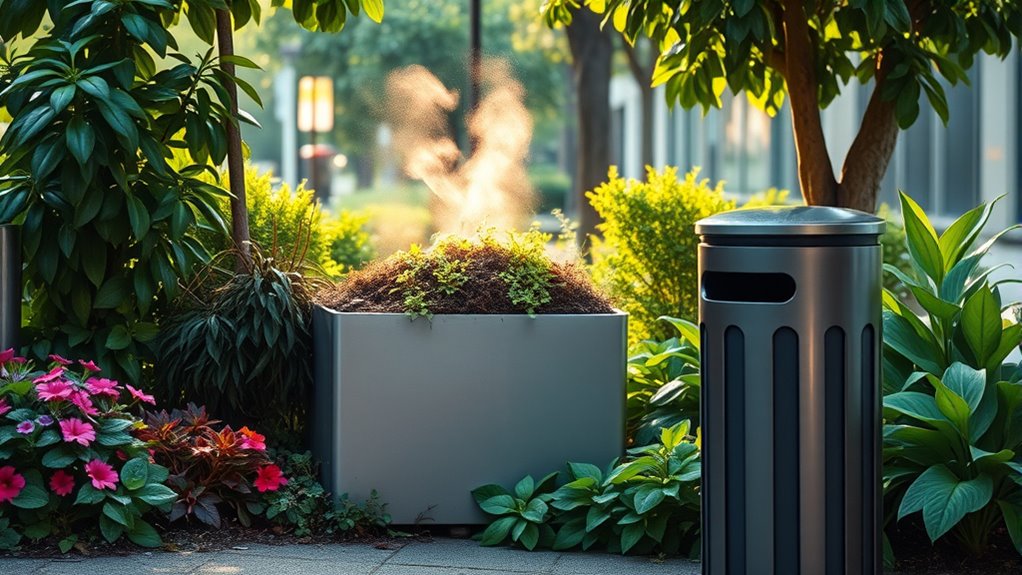

To control odors from your garbage and compost, be selective about what you add—stick to plant-based scraps and avoid dairy or meat. Keep moisture levels just right; aim for a damp, sponge-like texture. Neutralize smells with baking soda or activated charcoal, and consider using essential oils like lemon or lavender in moderation. Regularly monitor your compost conditions, so it stays fresh and inviting. Discover more tips to keep your outdoor space odor-free.
Key Takeaways
- Avoid adding dairy and meat to compost to minimize odors; focus on plant-based scraps like fruit and vegetable peels.
- Maintain a damp, sponge-like consistency in compost; mix in dry materials to absorb excess moisture and prevent foul smells.
- Use baking soda or activated charcoal to effectively neutralize odors in compost and garbage.
- A few drops of essential oils like lemon or lavender can mask unpleasant odors without disrupting beneficial microbes.
- Regularly monitor compost conditions and adjust moisture levels to ensure efficient decomposition and a fresher outdoor space.

Have you ever stepped outside only to be greeted by an unpleasant whiff from your garbage or compost bin? It’s a common issue that can turn your backyard into a less-than-pleasant place. Thankfully, tackling these odors isn’t as intimidating as it seems. By understanding how to manage biodegradable materials and implementing effective odor neutralization techniques, you can keep your outdoor space fresh and inviting.
First, let’s focus on the biodegradable materials you’re tossing into your compost. Not all scraps are created equal. While fruit and vegetable peels break down nicely, items like dairy and meat can lead to those nasty smells you’re trying to avoid. It’s best to stick to plant-based scraps. When you’re adding these materials, layer them with dry materials like leaves or shredded paper. This not only helps with balance but also aids in airflow, which can minimize odors.
Next, consider the importance of maintaining moisture levels in your compost. Too much moisture can create a soggy mess that breeds odor. On the flip side, if it’s too dry, the decomposition process slows down, leading to more smell. Aim for a damp, sponge-like consistency. If you notice excess moisture, mixing in dry materials can help absorb some of that liquid. Conversely, if it’s too dry, a light sprinkle of water can do wonders.
You can also employ some simple odor neutralization techniques. One effective method is using baking soda. This common household item absorbs odors and can be sprinkled directly onto the compost or garbage. Activated charcoal is another great option; it’s particularly effective at trapping and neutralizing unpleasant smells. You can find it in various forms, from bags to granules, making it easy to incorporate into your setup.
Simple odor neutralization techniques like baking soda and activated charcoal can effectively keep your compost and garbage smelling fresh.
Another technique is to use essential oils. A few drops of oils like lemon or lavender can mask odors and leave a pleasant scent behind. Just be cautious not to overdo it, as too many strong scents can deter beneficial microbes from doing their job in compost. Additionally, utilizing analytics cookies can help you track the effectiveness of your odor control methods over time.
Incorporating these tips can markedly reduce unpleasant odors around your garbage and compost bins. By being mindful of what you’re adding, ensuring proper moisture levels, and utilizing simple odor neutralization techniques, you can enjoy a fresher outdoor space. Don’t let foul smells keep you from enjoying your yard—take control today!
Frequently Asked Questions
Can Certain Plants Help Reduce Outdoor Garbage Odors?
Yes, certain scented plants can help reduce outdoor garbage odors. By planting varieties like lavender, rosemary, or mint, you can create a fragrant barrier that masks unpleasant smells. While indoor air purifiers work wonders indoors, these outdoor plants add a natural touch. Their essential oils not only freshen the air but also attract pollinators, enhancing your garden’s beauty. So, consider incorporating these aromatic plants to improve your outdoor experience!
What Materials Should Never Be Composted to Prevent Odors?
You should never compost food scraps like meat, dairy, or oils, as they can create foul odors and attract pests. Avoid using plastic bags in your compost pile, too; they break down slowly and contaminate the compost. Stick to plant-based materials, like fruit and vegetable scraps, leaves, and grass clippings. By avoiding these problematic items, you’ll keep your compost healthy and odor-free, making it a better resource for your garden.
How Often Should Compost Be Turned to Minimize Smell?
How often do you think compost needs turning to stay fresh? Ideally, you should turn your compost every 1 to 2 weeks. This compost turning frequency helps guarantee proper aeration, preventing unpleasant odors. Use compost aeration techniques like a pitchfork or compost tumbler for best results. By regularly turning it, you promote even decomposition and keep the mixture balanced, which ultimately reduces any potential smell while creating nutrient-rich compost for your garden.
Are There Specific Bins That Control Odors Better Than Others?
Yes, some bins do control odors better than others. When you’re looking at bins comparison, consider ones with tight-fitting lids and good ventilation. Aerated composters or enclosed bins often provide better odor containment because they promote airflow and reduce moisture buildup. Additionally, some bins come with filters or charcoal inserts that help absorb smells. Investing in a quality compost bin can make a significant difference in managing odors effectively.
How Does Weather Impact Garbage and Compost Odors?
Weather patterns considerably impact garbage and compost odors. On hot, humid days, odors can intensify and linger due to reduced odor dispersion. Conversely, cooler temperatures or windy conditions can help dissipate smells more quickly. If it’s raining, moisture can also break down materials faster, potentially reducing odors. Keeping your bins covered and well-ventilated, especially during extreme weather, can help you manage those odors effectively and maintain a fresher environment.
Conclusion
So, while you might think your garbage and compost are just a smelly nuisance, they’re actually a treasure trove of potential—if you can get past the odor! By embracing effective odor control techniques, you’ll find yourself not just battling unpleasant scents, but turning waste into a valuable resource. Who knew that with a little effort, your trash could transform from a stinky burden into a fragrant garden booster? Now that’s irony at its best!