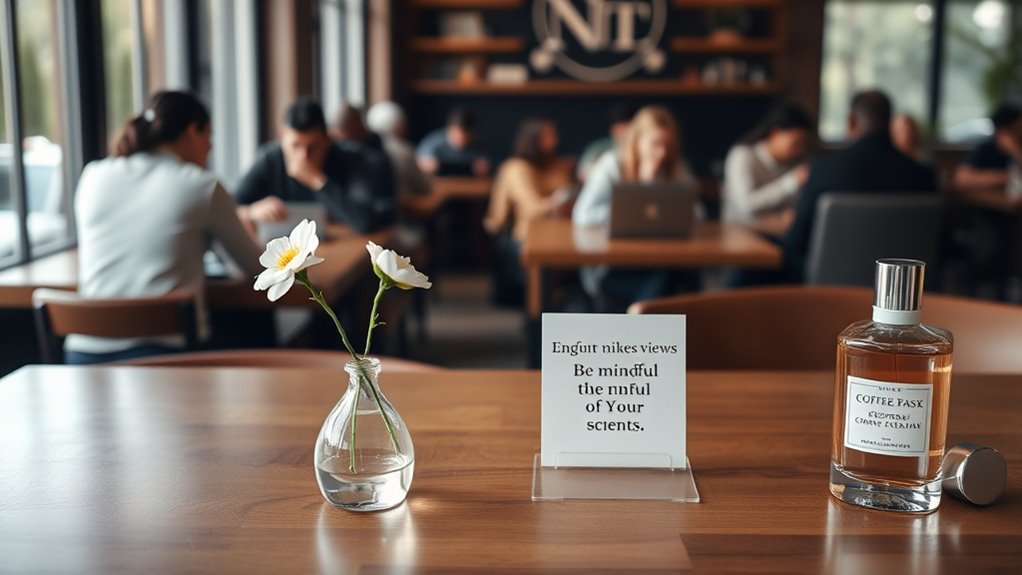

To be considerate of fragrance sensitivities, avoid wearing strong scents in shared spaces. Choose unscented products when possible and respect others’ comfort. Openly communicate about fragrance policies in your environment to promote awareness. If you must use scents, opt for natural alternatives like essential oils that are less irritating. Being mindful about fragrance can create a more inclusive atmosphere. Want to learn more about managing fragrance sensitivities effectively?
Key Takeaways
- Communicate openly about fragrance sensitivities to foster understanding and address individual needs in shared spaces.
- Establish and adhere to fragrance-free policies to create a healthier environment for everyone.
- Choose unscented or natural products to minimize exposure to irritants that affect sensitive individuals.
- Be mindful of personal fragrance use and consider the comfort of others in communal areas.
- Promote awareness and respectful behavior regarding fragrance sensitivities to enhance inclusivity and comfort for all.

While many people enjoy the pleasant scents of perfumes and air fresheners, others find themselves grappling with fragrance sensitivities that can lead to discomfort or even health issues. If you’ve ever noticed someone sneezing or experiencing headaches in response to a strong scent, you know how real this issue can be. Being aware of fragrance sensitivities is vital, especially when you’re in shared spaces like the workplace. It’s not just about personal preference; it’s about creating an environment where everyone can feel comfortable.
You might be surprised to learn that many common fragrances can trigger symptoms like headaches, nausea, or respiratory issues. This is where being considerate comes in. If you or someone you know has these sensitivities, it’s important to communicate openly. You might even consider discussing workplace policies around fragrance use. Establishing guidelines can help create a healthier environment for everyone. Encouraging a fragrance-free policy can markedly reduce the discomfort experienced by sensitive individuals.
For those of you who struggle with fragrance sensitivities, natural remedies can provide some relief. Essential oils, for instance, offer a way to enjoy pleasant scents without the harsh chemicals found in commercial products. Opting for unscented lotions, soaps, and cleaning products can also make a noticeable difference. If you’re dealing with a fragrance sensitivity flare-up, you might try diffusing calming essential oils like lavender or eucalyptus to help ease your symptoms. Additionally, engaging in yoga practices can enhance your overall well-being by promoting relaxation and reducing stress.
When you’re in a situation where you can’t avoid fragrances, like at a social gathering or in a shared office, having a few strategies can help. Carrying a portable air purifier or using a nasal spray designed to alleviate allergy symptoms can be game-changers. You might also want to practice breathing techniques to help manage any discomfort that arises.
Ultimately, cultivating an understanding and supportive atmosphere around fragrance sensitivities benefits everyone. It’s not just about avoiding strong scents; it’s about fostering an inclusive environment. Being mindful of your fragrance choices and advocating for thoughtful workplace policies ensures that everyone feels respected and comfortable. By taking these steps, you can create a more pleasant experience not just for yourself, but for those around you as well.
Frequently Asked Questions
What Are Common Symptoms of Fragrance Sensitivities?
Common symptoms of fragrance sensitivities include headaches, sneezing, coughing, and skin irritation. You might also experience respiratory issues or fatigue when exposed to strong scents. Many people find that fragrance ingredient transparency helps them identify triggers. Creating scent-free zones can markedly reduce discomfort for those sensitive to fragrances. By being mindful of your surroundings and the products you use, you can contribute to a more comfortable environment for everyone.
How Can I Identify My Fragrance Triggers?
You can identify your fragrance triggers by turning your nose into a detective! Start by keeping a journal of scents that make you sneeze or feel dizzy. Note any scent masking products you’ve used. Then, explore fragrance alternatives like essential oils or unscented products. Gradually introduce new scents one at a time, and pay attention to your body’s reactions. Soon, you’ll be able to navigate the fragrant world with confidence!
Are Natural Fragrances Safer Than Synthetic Ones?
Natural fragrances aren’t necessarily safer than synthetic ones. While many people believe they’re less likely to cause fragrance allergies, some natural ingredients can still trigger sensitivities. You’ve got to contemplate individual reactions, as everyone’s body responds differently. Synthetic fragrances can also be formulated to avoid common allergens, making them suitable for some. When choosing between natural vs synthetic, it’s essential to know your own triggers and test products accordingly to find what works for you.
Can Fragrance Sensitivities Develop Over Time?
Fragrance sensitivities can develop over time, like a flower wilting under too much sun. You might notice that scents you once enjoyed now trigger headaches or allergies. This can stem from a history of fragrance sensitivities, where repeated exposure heightens your body’s response. The psychological effects of fragrances also play a role, as certain scents can evoke memories or emotions that amplify your sensitivity. Staying aware of your reactions can help you manage this evolution.
Is There a Cure for Fragrance Sensitivities?
There isn’t a cure for fragrance sensitivities, but you can manage symptoms effectively. You might want to explore fragrance alternatives that are less irritating or opt for scent-free zones in your home or workplace. Creating these spaces helps minimize exposure and makes it easier for you to breathe comfortably. Additionally, communicating your needs to those around you can foster a more understanding environment, reducing the impact of fragrances on your daily life.
Conclusion
Being mindful of fragrance sensitivities is like tending to a delicate garden. Just as certain plants thrive in specific conditions, people flourish in environments free from overpowering scents. Imagine walking through a vibrant field, only to be overwhelmed by a single, strong flower—it’s distracting and can ruin the experience. By choosing subtle fragrances or going scent-free, you can help create a space where everyone feels comfortable and appreciated, allowing relationships to blossom without the burden of discomfort.