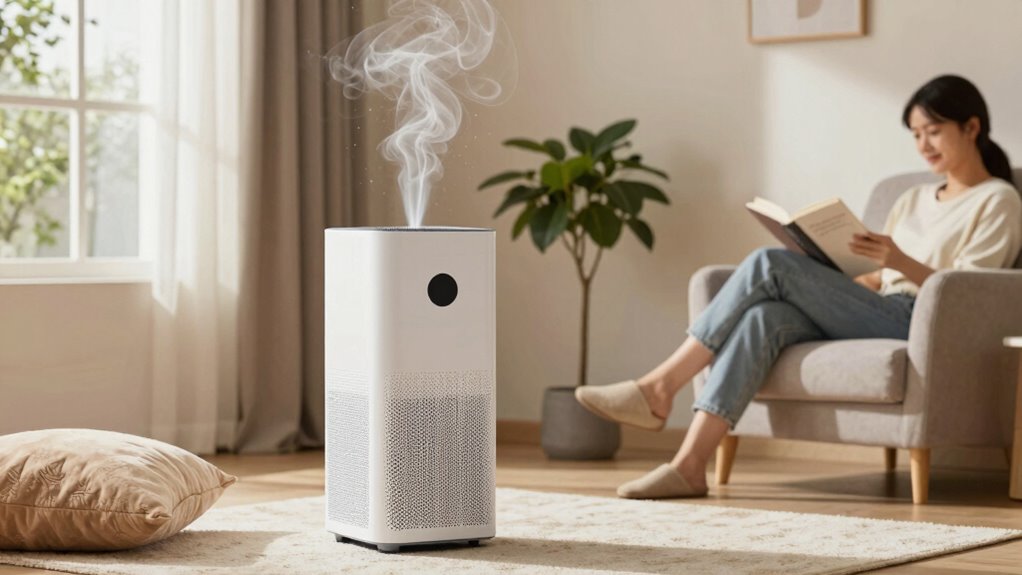

To enjoy cleaner air and better comfort, choosing an air purifier with a HEPA filter is essential, as it captures tiny allergens like pollen, pet dander, and dust. Make sure it suits your room size and runs quietly, especially at night. Regular filter replacements keep the device working effectively, reducing allergy symptoms. While air purifiers improve indoor air quality, they’re just part of allergy management. Keep exploring to learn how to maximize their benefits in your home.

Get oils, diffusers and self-care delivered free with Prime
- Fast, free delivery on millions of items
- Prime Video, Amazon Music and more included
- Member-only deals all year
Key Takeaways
- Air purifiers remove airborne allergens like dust, pollen, pet dander, and mold spores, improving indoor air quality for allergy relief.
- HEPA filters are essential for trapping tiny allergens, while activated carbon filters reduce odors and chemical pollutants.
- Choosing the right purifier depends on room size, CADR rating, and quiet operation for comfort during daily activities or sleep.
- Regular filter replacement and maintenance are crucial to ensure continued effectiveness and optimal air quality.
- Using an air purifier creates a healthier indoor environment, reducing allergy symptoms and enhancing overall breathing comfort.

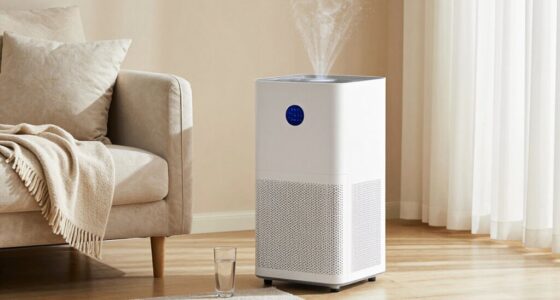
If you suffer from allergies, an air purifier can be a game-changer for creating a healthier indoor environment. Poor air quality often worsens allergy symptoms, making it harder for you to breathe comfortably and enjoy your daily activities. By filtering out airborne irritants like dust, pollen, pet dander, and mold spores, an air purifier helps improve the air quality inside your home. When the air is cleaner, your allergy symptoms—such as sneezing, congestion, and itchy eyes—can be markedly reduced, giving you relief and better overall comfort.
You might wonder how an air purifier actually works to improve your indoor air. Most models use HEPA filters, which are highly effective at capturing tiny particles that trigger allergies. These filters trap allergens as the air passes through, preventing them from circulating back into the room. This process guarantees that the air you breathe is cleaner and safer, especially during peak allergy seasons or if you live in areas with high pollution levels. Some advanced purifiers also incorporate activated carbon filters, which absorb odors and chemical pollutants, further enhancing air quality.
Choosing the right air purifier depends on the size of the room and your specific needs. For allergy sufferers, a device with a high Clean Air Delivery Rate (CADR) is ideal because it can filter a larger volume of air more rapidly. You should also look for models that operate quietly, so they don’t disturb your daily routine or sleep. Proper maintenance is essential; regularly replacing filters ensures the purifier continues to work efficiently, keeping air quality consistently high and allergy symptoms at bay. Regularly checking for filter replacement guidelines can help maintain optimal performance.
Using an air purifier is a proactive step toward managing allergies indoors. While it isn’t a cure-all, it considerably reduces airborne allergens and creates a more comfortable living space. If you often experience allergy symptoms indoors, adding a quality air purifier to your environment can make a tangible difference. It’s especially useful for households with pets, smokers, or in urban areas with high pollution levels, where indoor air quality tends to be compromised. By investing in an air purifier, you’re taking control of your indoor environment, making it easier to breathe and enjoy your home without the constant irritation of allergy symptoms. Ultimately, cleaner air means better comfort, and an air purifier is a practical tool to achieve that goal.
As an affiliate, we earn on qualifying purchases.
Frequently Asked Questions
How Often Should I Replace the Filters in My Air Purifier?
You should replace your air purifier filters every 6 to 12 months, depending on the filter lifespan and usage. Check the manufacturer’s recommendations for your specific model, as replacement frequency varies with air quality and how often you use the purifier. Regularly inspecting the filters helps guarantee peak performance, so if they look dirty or clogged sooner, replace them earlier to maintain cleaner air and better allergy relief.
Can Air Purifiers Eliminate Pet Odors Completely?
Did you know that air purifiers can reduce pet odors by up to 90%? While they considerably improve air quality, they might not eliminate pet odors completely, especially if pet hair and dander accumulate. Air purifiers with activated carbon filters excel at odor removal, but for full elimination, regular cleaning and vacuuming are essential. Combining these efforts helps keep your home fresher and more comfortable.
Are There Specific Air Purifiers Better for Asthma Sufferers?
Yes, some air purifiers are better for asthma sufferers. Look for models with HEPA filters, as they trap airborne allergens like dust, pollen, and pet dander effectively. Additionally, ionizer technology can help reduce airborne particles and improve air quality. However, choose devices with allergen-specific features and avoid those that produce ozone, which can irritate asthma symptoms. Always check for certifications to guarantee safety and effectiveness.
Do Air Purifiers Require Professional Installation?
You might wonder if air purifiers need professional installation, and the answer is usually no. Most models have simple installation requirements you can handle yourself, like plugging in and placing the unit correctly. However, some larger or complex systems, especially those integrated into HVAC setups, may require professional assistance. Always check the manufacturer’s instructions to verify proper setup and maximum performance, but for most, DIY installation suffices.
How Loud Are Air Purifiers During Operation?
Air purifiers are generally quiet, with noise levels ranging from whisper-quiet to around 60 decibels, similar to a normal conversation or background music. During operation, you might notice some sound, but it’s usually unobtrusive. The sound comparison varies by model—higher-end purifiers tend to have lower noise levels, so you can enjoy cleaner air without much disruption. Choose a quieter model if noise sensitivity is a concern.
Conclusion
Imagine your home as a garden — without proper care, weeds and pests can take over. An air purifier acts like a diligent gardener, clearing out allergens and pollutants to keep your space healthy. Studies show that using one can substantially reduce allergy symptoms, turning your home into a sanctuary. So, invest in an air purifier and breathe easier, knowing you’re cultivating a cleaner, more comfortable environment where you and your loved ones can thrive.
Fall Picks
fall essentials
As an affiliate, we earn on qualifying purchases.