Air fresheners can be risky for babies because they often contain volatile organic compounds (VOCs) and synthetic chemicals. These substances can lead to respiratory issues and allergic reactions in sensitive little ones. Babies have developing immune systems, making them more vulnerable to these harmful effects. Instead of commercial products, consider using natural alternatives like essential oils or baking soda for a safe, fresh home environment. Find out how to create a healthier space for your baby.
Key Takeaways
- Air fresheners often contain VOCs and synthetic chemicals that can harm babies’ developing immune systems.
- Exposure to these chemicals may lead to respiratory issues, coughing, and sneezing in infants.
- Natural alternatives, such as essential oils or homemade sprays, are safer for freshening the air.
- Using baking soda and houseplants can effectively control odors without risking babies’ health.
- Regular cleaning and good ventilation help reduce indoor pollutants and maintain a safe environment for babies.

Have you ever wondered whether that pleasant scent from your air freshener is actually safe for your home? Many people use air fresheners to create a welcoming atmosphere, but when you’ve got a baby in the house, safety should be your top priority. The reality is that some air fresheners contain chemicals that may pose risks, particularly for young children who are more vulnerable to their effects. You might want to contemplate how these products can impact your baby’s health, especially if they have any chemical sensitivities.
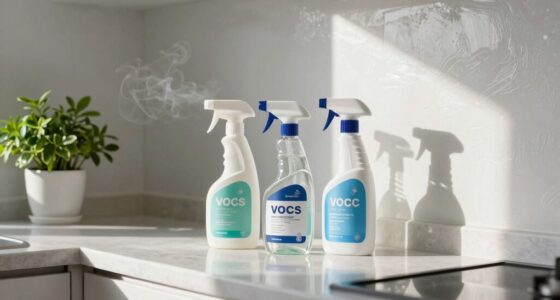
Air fresheners often release volatile organic compounds (VOCs) and other synthetic chemicals into the air. These compounds can trigger a range of health issues, from headaches to respiratory problems, and even allergic reactions. Babies and toddlers have developing immune systems, making them more susceptible to these irritants. You may find that your little one is more prone to coughing or sneezing after you’ve sprayed air freshener, indicating it might not be the best choice for your home.
Air fresheners release harmful VOCs that can cause health issues, especially for babies with developing immune systems.
So, what can you do to keep your home smelling fresh without compromising your baby’s health? One effective approach is to explore natural alternatives. Essential oils, for instance, can provide pleasant scents without the harmful chemicals commonly found in commercial air fresheners. You can create your own air freshener by mixing water with a few drops of lavender or chamomile essential oil in a spray bottle. Not only will this keep your home smelling great, but it’ll also be gentle on your baby’s sensitive system. Additionally, consider the impact of advanced cleaning features in smart home devices that can help maintain a fresh environment without harmful chemicals.
Another option is to use baking soda, which naturally absorbs odors. You can place an open container of baking soda in your baby’s room or sprinkle it on carpets before vacuuming. This simple solution eliminates unpleasant smells without introducing any harmful chemicals into your environment. You might also consider using houseplants that purify the air, such as spider plants or peace lilies, which can enhance your home’s scent naturally while improving air quality.
Frequently Asked Questions
Can Air Fresheners Cause Allergic Reactions in Babies?
Yes, air fresheners can cause allergic reactions in babies. The ingredients found in air fresheners, such as fragrances and preservatives, might trigger allergic symptoms like sneezing, rashes, or respiratory issues. If you notice any unusual reactions in your baby after using air fresheners, it’s best to stop using them immediately. Always read labels and consider opting for natural alternatives to reduce the risk of exposing your little one to potential allergens.
Are Natural Air Fresheners Safer Than Synthetic Ones?
Imagine filling your home with the sweet scent of fresh lavender or zesty citrus. Natural alternatives often feel safer compared to synthetic ones, which can raise concerns about harmful chemicals. When you choose essential oils or plant-based scents, you’re enveloping your space in nature’s embrace. However, not all natural options are risk-free, so always check ingredients. Ultimately, you’re creating a cozy, inviting atmosphere while being mindful of safety for everyone in your home.
How Often Should I Use Air Fresheners Around Babies?
You should limit air freshener usage around babies to a few times a week, focusing on natural options. Excessive use can adversely affect air quality and contribute to environmental impact, which is especially concerning for little ones. When you do use them, guarantee proper ventilation and avoid spraying directly near your baby. Always prioritize their safety and comfort while creating a pleasant atmosphere in your home.
What Signs Indicate My Baby Is Reacting to Air Fresheners?
Seeing is believing, so watch for signs of your baby reacting to air fresheners. If you notice coughing, sneezing, or wheezing, it could indicate fragrance sensitivity. Observe any changes in their breathing patterns; respiratory distress may manifest as labored breathing or a persistent cough. If your baby seems unusually fussy or irritable after using air fresheners, it’s best to remove the source and consult a pediatrician for guidance.
Can Air Fresheners Affect Pets in the Same Way as Babies?
Yes, air fresheners can affect pets similarly to how they might affect babies. Pets can suffer from allergies just like humans do, and they can be sensitive to air freshener toxicity. If you notice your pet sneezing, coughing, or showing signs of discomfort, it might be reacting to the chemicals in the air freshener. Always make certain your home is safe for your furry friends by opting for pet-friendly alternatives whenever possible.
Conclusion
As you ponder the air fresheners in your home, a nagging thought creeps in: are they truly safe for your little one? The sweet scents might mask odors, but hidden dangers lurk within those colorful bottles. You want to create a cozy haven for your baby, yet the risks can be unsettling. Before you spritz again, consider the potential harm. Your baby’s health is priceless—make sure you’re not trading safety for a fleeting fragrance. What will you choose?