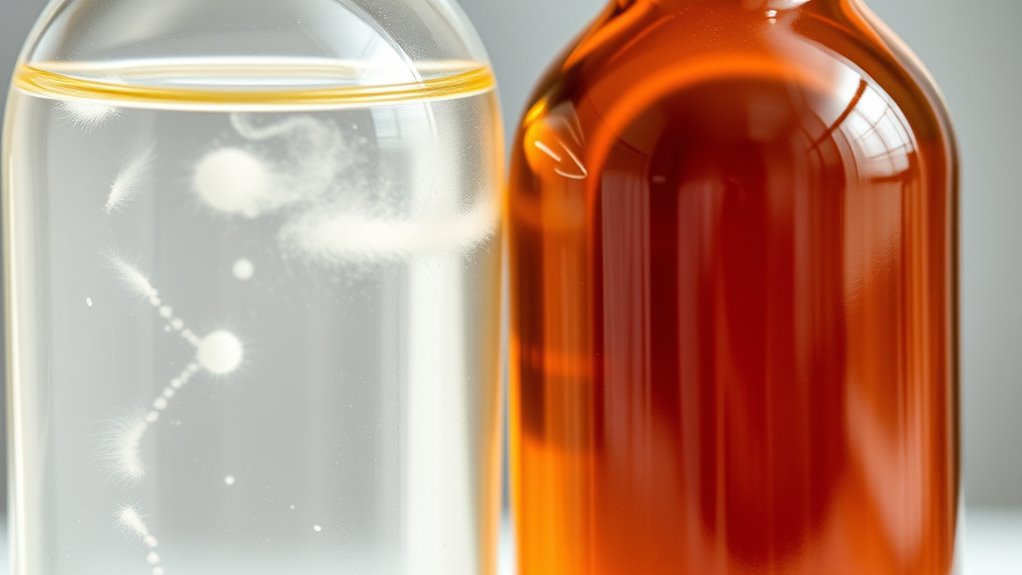

Hydrosols and essential oils are both natural plant extracts, but they serve different purposes. Essential oils are highly concentrated and potent, often used in aromatherapy, skincare, or for therapeutic benefits, but they require careful handling. Hydrosols are milder and diluted, making them perfect for sensitive skin and gentle uses like facial mists or calming sprays. To discover how to choose the right one for your needs, keep exploring the details below.
Key Takeaways
- Essential oils are highly concentrated extracts, while hydrosols are diluted aromatic waters from steam distillation.
- Hydrosols are milder and safer for sensitive skin, whereas essential oils require dilution and careful handling.
- Essential oils offer potent therapeutic benefits like mood enhancement and physical healing; hydrosols provide gentle, calming effects.
- Hydrosols are produced as a byproduct of distillation, making them more environmentally friendly than the often resource-intensive essential oils.
- Both can be used in skincare and aromatherapy, but hydrosols are more versatile and accessible for beginners.
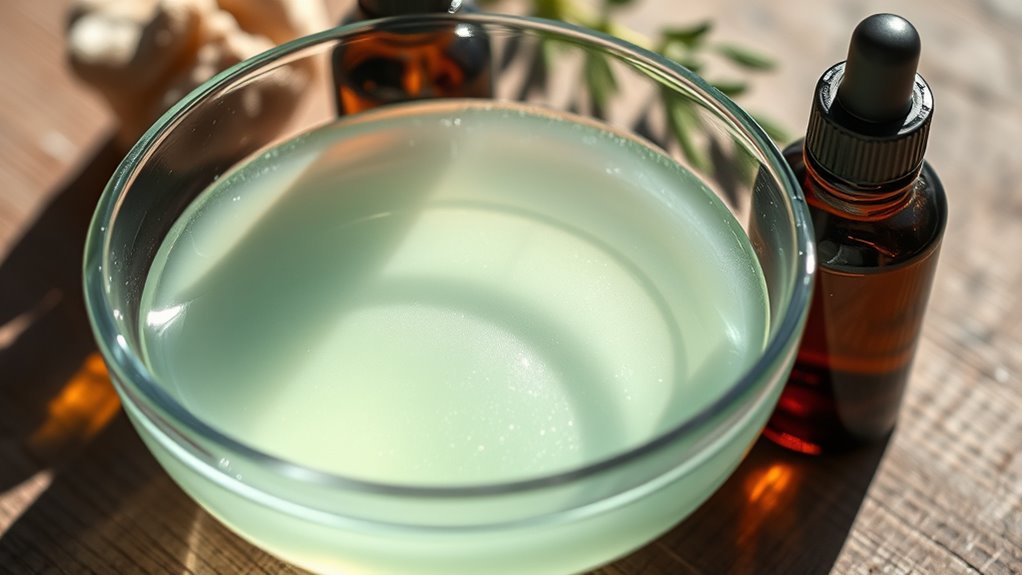
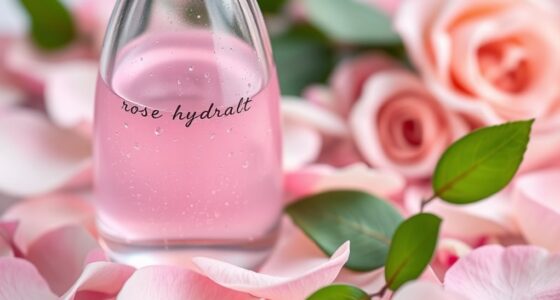
Ever wondered how hydrosols differ from essential oils? While both are popular in natural healing and skincare, they have distinct differences rooted in their extraction methods and aromatherapy benefits. Essential oils are highly concentrated plant extracts obtained through methods like steam distillation, cold pressing, or solvent extraction. These techniques focus on capturing the aromatic compounds from plant parts such as flowers, leaves, or roots. The result is a potent oil that contains the essence of the plant’s fragrance and therapeutic properties. In contrast, hydrosols, also known as flower waters or botanical waters, are produced during the same steam distillation process but capture the aromatic water that remains after extracting essential oils. This water contains tiny amounts of plant compounds dissolved in water, making it much gentler and more diluted than essential oils. Because hydrosols are a byproduct of steam distillation, they often retain a broader spectrum of plant constituents in a more delicate form. Additionally, hydrosols are often used in skincare routines for their gentle and soothing properties. When it comes to extraction methods, the primary difference is that essential oils are concentrated, often requiring significant plant material to produce small amounts of oil. Hydrosols, on the other hand, are byproducts of the distillation process and are generally more environmentally friendly to produce. Because they are less concentrated, hydrosols are generally safer for direct skin contact and more suitable for use in facial mists, toners, or as gentle sprays. The extraction process for hydrosols preserves a broader spectrum of plant constituents, albeit in a diluted form, which contributes to their unique aroma and therapeutic qualities. Their gentle nature makes them ideal for sensitive skin or for those seeking a milder experience.
In terms of aromatherapy benefits, essential oils are known for their powerful therapeutic effects, such as mood enhancement, stress relief, and physical healing. They can be diffused, applied topically (often diluted), or ingested in some cases. Hydrosols, while milder, still offer notable aromatherapy benefits. They can help soothe irritated skin, promote relaxation, and balance emotions without the intensity of pure essential oils. Many people prefer hydrosols for their subtle scent and calming properties, especially if they’re new to aromatherapy or have sensitive skin. Furthermore, hydrosols are often more affordable and easier to find than pure essential oils, making them an accessible option for beginners. Understanding the benefits of each helps consumers make informed choices suited to their preferences and needs.
Ultimately, understanding the differences in extraction methods and aromatherapy benefits helps you choose the right product for your needs. If you want potent therapeutic effects, essential oils are your go-to. But if you’re looking for a more gentle, versatile option, hydrosols provide a delicate, aromatic experience that can complement your self-care routine beautifully.

Dreo Smart Humidifiers for Bedroom, Top Fill 4L Supersized Humidifier Large Room with 28 dB, 36H Runtime, Touch/APP/Voice Control, Nightlight, Cool Mist Humidifiers for Baby, Plants, Indoor, Black
𝐏𝐫𝐞𝐜𝐢𝐬𝐞 𝐀𝐮𝐭𝐨 𝐇𝐮𝐦𝐢𝐝𝐢𝐭𝐲, 𝐕𝐨𝐢𝐜𝐞 & 𝐀𝐩𝐩 𝐂𝐨𝐦𝐦𝐚𝐧𝐝: Stop guessing the right humidity. With enhanced sensing precision for more...
As an affiliate, we earn on qualifying purchases.
Frequently Asked Questions
Are Hydrosols Safe for Children and Pets?
You wonder if hydrosols are safe for children and pets. Generally, hydrosols are milder and considered safer for pediatric safety and pet safety compared to essential oils. However, you should still use them with caution—dilute properly and avoid direct application on pets or children’s sensitive skin. Always consult a healthcare professional or veterinarian before introducing new products, as individual reactions can vary.
How Should I Store Hydrosols and Essential Oils?
To guarantee your hydrosols and essential oils stay fresh, you should use proper storage techniques and preservation methods. Store them in dark glass bottles away from direct sunlight, heat, and humidity. Keep the caps tightly closed to prevent oxidation and contamination. For longer shelf life, consider refrigeration. Proper storage preserves their potency and scent, making your oils safe and effective for use over time.
Can Hydrosols Replace Essential Oils in Aromatherapy?
You might wonder if hydrosols can replace essential oils in aromatherapy. While hydrosol benefits include gentle, soothing properties and serve as excellent aromatherapy alternatives, they don’t offer the same concentration or potency. Essential oils provide stronger therapeutic effects but can be overpowering. If you seek a milder, invigorating scent, hydrosols work well. However, for deep, targeted benefits, essential oils remain your best choice.
Do Hydrosols Have the Same Shelf Life as Essential Oils?
You might wonder if hydrosols have the same shelf life as essential oils. Generally, hydrosols have shorter shelf stability due to their water content, making proper storage essential. Follow storage guidelines by keeping them in airtight, dark glass bottles in a cool, refrigerated place. This helps preserve their freshness and potency longer. Unlike essential oils, hydrosols are more prone to microbial growth, so watch for signs of spoilage.
Are There Any Allergens Commonly Found in Hydrosols?
You might wonder if hydrosols contain common irritants or allergens. While generally gentler than essential oils, some individuals with allergen sensitivity could react to certain hydrosols, especially if they contain residual plant particles or preservatives. It’s wise to do a patch test before extensive use. Keep in mind, allergens vary based on the plant source, so always check ingredients and consult with a healthcare professional if you have known sensitivities.

LEVOIT Top Fill Humidifiers for Bedroom, 2.5L Tank for Large Room, Easy to Fill & Clean, 28dB Quiet Cool Mist Air Humidifier for Home Baby Nursery & Plants, Auto Shut-off for Safety, 25H
𝙁𝙖𝙨𝙩 𝙃𝙪𝙢𝙞𝙙𝙞𝙛𝙞𝙘𝙖𝙩𝙞𝙤𝙣 𝘼𝙡𝙡 𝙉𝙞𝙜𝙝𝙩: Runs for up to 25 hours on low thanks to its SUPER LARGE capacity...
As an affiliate, we earn on qualifying purchases.
Conclusion
So, now that you know hydrosols are the gentle, watery sidekick to the mighty, aromatic essential oils, you can impress friends with your botanical wisdom. Just remember, one’s like a whisper and the other a shout—choose your aromatic weapon wisely. Whether you’re spritzing or diffusing, never underestimate the power of these plant potions. After all, who knew that nature’s perfume could be so complicated? Happy aromatherapy adventures—may your scent game be forever enlightened!

DREO Humidifiers for Bedroom, 6L Easy to Fill & Clean, 60H Runtime for Large room, 28 dB Quiet Cool Mist Air Humidifier for Plant, Baby Nursery, Home, Indoor, Night Light, Precise Humidity Control
𝙎𝙖𝙮 𝙂𝙤𝙤𝙙𝙗𝙮𝙚 𝙩𝙤 𝘿𝙧𝙮 𝘿𝙖𝙮𝙨: This humidifier for large room emits a cool, 5 μm ultrafine mist up...
As an affiliate, we earn on qualifying purchases.

Homvana 3.6L Top-Fill Cool Mist Humidifiers for Bedroom, Large Room & Plants, 23dB Ultra-Quiet, Easy-to-Clean 2-in-1 Baby Humidifier & Oil Diffuser for Congestion Relief, Lasts Up to 4 Nights (Grey)
[3-in-1 Humidifier Meets All You Expect] Cool Mist Humidifier+Aromatherapy+Mood Light, purchase for once to satisfy all you expect!...
As an affiliate, we earn on qualifying purchases.