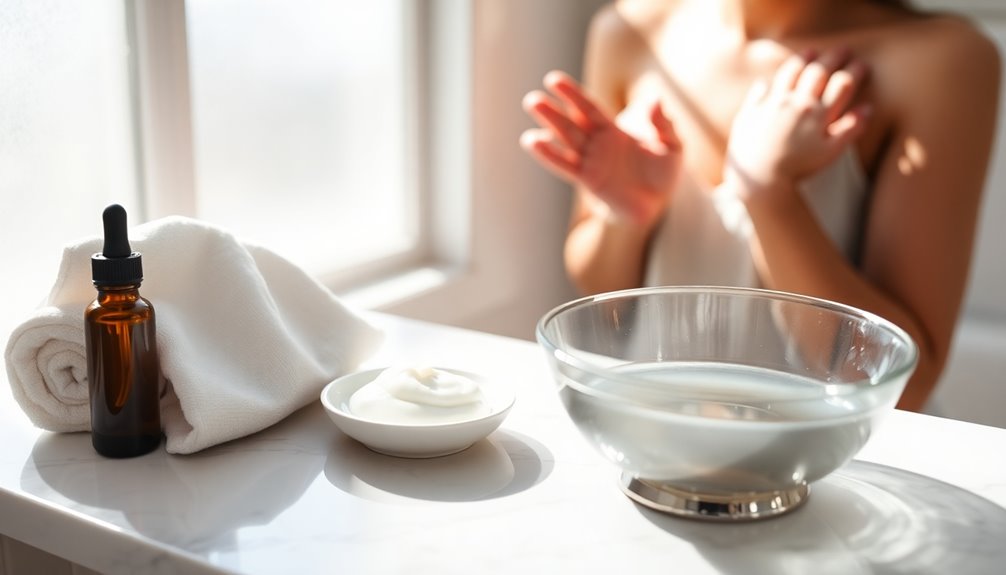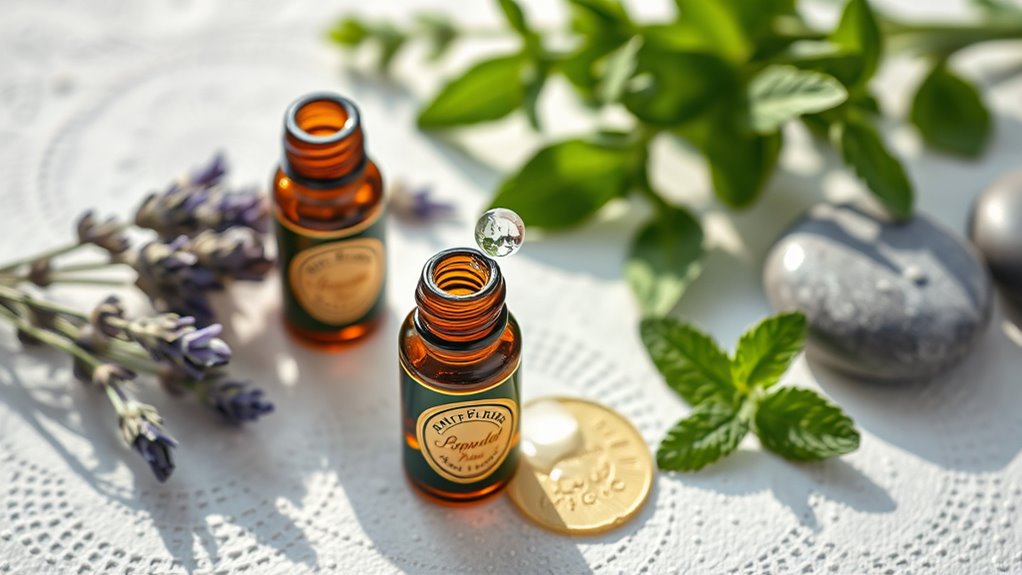

To relieve headaches and migraines naturally, try using essential oils like peppermint, lavender, and eucalyptus. You can diffuse calming scents, apply diluted oils to your temples or neck, or add them to a warm bath for relaxation. Peppermint provides a cooling, soothing sensation, while lavender helps reduce stress, and eucalyptus clears congestion. Using these oils consistently can support your relief efforts. Keep exploring to discover more ways to incorporate aromatherapy into your routine for better results.
Key Takeaways
- Peppermint, lavender, and eucalyptus oils are commonly used for headache and migraine relief due to their analgesic and calming properties.
- Diffusing essential oils or applying diluted blends to temples and neck can help reduce headache intensity.
- Combining peppermint, lavender, and eucalyptus in aromatherapy routines may enhance relief and relaxation.
- Always dilute essential oils properly and perform patch tests to prevent skin irritation or allergic reactions.
- Aromatherapy provides a natural, drug-free complementary approach to managing headache and migraine symptoms.

Are you tired of relying solely on medication to manage headaches and migraines? If so, exploring natural remedies like aromatherapy might offer the relief you’re seeking. Aromatherapy techniques involve using essential oils through inhalation or topical application to target headache symptoms. You can try diffusing calming scents in your space or applying diluted oils to your temples and neck. With consistent use, many find these methods reduce headache intensity and frequency. To maximize benefits, focus on common essential oil blends designed for headache relief. These blends often combine oils like peppermint, lavender, and eucalyptus, known for their soothing and analgesic properties.
When practicing aromatherapy techniques, it’s important to use high-quality essential oils and to follow proper dilution guidelines. For instance, mixing a few drops of peppermint oil with a carrier oil like coconut or jojoba allows safe topical application. Gently massaging this blend onto your temples, forehead, or shoulders can help ease tension headaches. Alternatively, adding a few drops of lavender oil to a diffuser and inhaling the aroma can promote relaxation and reduce stress, which often triggers migraines. You might also find that inhaling eucalyptus helps clear congestion and alleviates head pressure. Incorporating aromatherapy techniques into your daily routine can further enhance the calming effects and support ongoing relief. Using proper dilution is essential for safe application and to prevent skin irritation. Additionally, understanding the benefits of essential oils can help you select the most effective options for headache relief.
Research shows that essential oils for headache relief can be an effective complementary therapy, providing a natural way to alleviate symptoms. Common essential oil blends for headaches are simple but effective. A popular combination includes peppermint for its cooling effect and headache relief, lavender for calming stress, and eucalyptus for its invigorating properties. Creating a personalized blend tailored to your needs can enhance your aromatherapy experience. Some prefer to prepare a rollerball with these oils to apply directly when symptoms start. Others enjoy adding drops to a warm bath for full-body relaxation. Whichever method you choose, consistency is key. Regular use of these aromatherapy techniques can help build a routine that supports your overall headache management.
It’s also worth noting that aromatherapy isn’t a cure-all but a complementary approach that can complement other treatments. Always perform a patch test before trying new oils to avoid allergic reactions and consult with a healthcare professional if you’re pregnant, nursing, or have underlying health conditions. When used correctly, aromatherapy techniques and common essential oil blends can become valuable tools in your headache relief arsenal. They offer a natural, drug-free option to help you regain control over your pain and improve your quality of life. Incorporating consistent application into your routine can enhance the effectiveness of these remedies over time. With patience and proper application, you might find that these simple, soothing practices make a noticeable difference in how often and how severely your headaches affect you.

Peppermint Essential Oil Roll-On 10 ml for Skin, Aromatherapy, Minty Scent
- All-Natural Essential Oil: Made from pure peppermint oil
- Natural Perfume: Calming minty fragrance
- Aromatherapy Benefits: Promotes relaxation and tension relief
As an affiliate, we earn on qualifying purchases.
As an affiliate, we earn on qualifying purchases.
Frequently Asked Questions
Can Essential Oils Cause Allergic Reactions When Used for Headaches?
You might wonder if essential oils can cause allergic reactions. Yes, there’s an allergy risk if you have sensitivity concerns or allergies to certain plants. Essential oils are potent, so some people experience skin irritation, redness, or respiratory issues. To avoid reactions, do a patch test first and use diluted oils. Always consult with a healthcare professional if you have known allergies or sensitivities before trying new essential oils.
How Long Does It Take to Feel Relief After Applying Essential Oils?
Ironically, patience isn’t your strongest suit, yet relief from essential oils can vary. Typically, you’ll notice an onset time of about 15 to 30 minutes, but relief duration depends on the oil and your condition. Some find quick respite, while others need longer. Keep in mind, consistent use might improve your chances of quicker and longer-lasting relief, but everyone’s response differs.
Are There Any Safety Concerns for Pregnant Women Using Essential Oils?
When considering pregnancy safety, you should be cautious with essential oils. Some oils can cause contractions or other issues, so it’s important to follow essential oil precautions. Always consult your healthcare provider before using any essential oils during pregnancy. Certain oils are safe in small amounts, but others should be avoided completely. Staying informed and prioritizing safety helps you enjoy the benefits without risking your health or your baby’s.
Can Essential Oils Interact With Medications for Migraines?
You might wonder if essential oils can interact with your migraine medications. While generally considered safe, essential oil safety includes being aware of potential drug interactions. Some oils, like peppermint or eucalyptus, could enhance or interfere with medication effects. Always check with your healthcare provider before combining essential oils with migraine treatments to prevent adverse effects and guarantee safe, effective relief.
What Is the Best Method to Apply Essential Oils for Headache Relief?
To apply essential oils effectively for headache relief, you should consider diffusion methods and topical application. Diffusing oils in your space allows you to breathe in soothing scents, helping ease tension. For targeted relief, dilute the oils with a carrier oil and gently apply to your temples, neck, or forehead. Always test patch first and avoid sensitive areas. Combining both methods maximizes comfort and relief during headaches.
Conclusion
Incorporating essential oils into your routine can be like adding a gentle breeze to a stuffy room—refreshing and soothing. When used wisely, these natural remedies can ease headache and migraine pain, offering relief without harsh chemicals. Remember, everyone’s different, so listen to your body and find what works best for you. With patience and care, essential oils can become your trusted allies, helping you turn a cloudy day into one filled with sunshine and clarity.