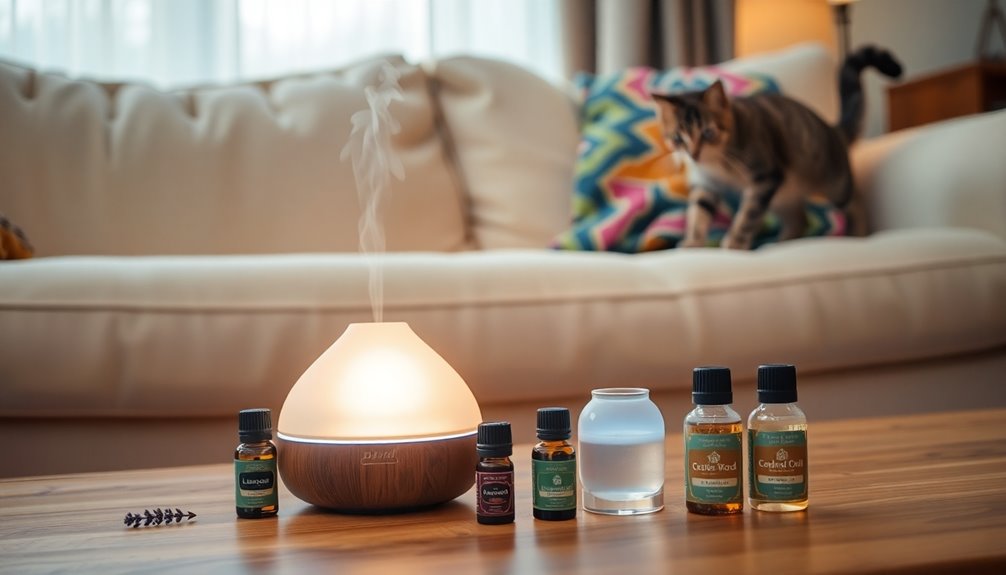
To guarantee safe use of essential oils, always follow recommended guidelines for dilution and duration, keeping diffusers in well-ventilated areas. Avoid using oils that may cause irritation or sensitivities, especially around children, pets, or during pregnancy, without consulting a professional. Store oils safely out of reach and perform patch tests before full use. Remember, natural doesn’t mean completely safe—learning essential safety do’s and don’ts helps you enjoy their benefits responsibly. If you continue, you’ll discover key tips for safe and effective use.
Key Takeaways
- Follow recommended dilution ratios and diffusion guidelines to prevent irritation or adverse reactions.
- Avoid diffusing oils in poorly ventilated areas or for extended periods to ensure safety.
- Conduct patch tests and consult professionals before using essential oils during pregnancy or with health conditions.
- Keep essential oils out of reach of children and pets to prevent accidental ingestion or reactions.
- Educate yourself on specific oils’ properties and potential risks to ensure responsible usage.

Have you ever wondered if using essential oils is completely safe? It’s a common question, especially as their popularity continues to grow. When you’re considering diffusing essential oils in your home, diffusion safety becomes a top priority. Not all oils are suitable for everyone, and some can cause irritation or allergic reactions if not used properly. To ensure safety, always follow recommended guidelines for diffusion, such as limiting the duration and concentration of oils in the diffuser. Keep the diffuser in a well-ventilated area and avoid continuous use for hours on end. It’s also wise to check the specific oils you’re diffusing, as some may be more potent or irritating than others. Proper diffusion not only minimizes potential risks but also helps you enjoy the aromatic benefits without worry.
Pregnancy precautions are another critical aspect of essential oil safety. If you’re pregnant, you need to be especially cautious with the oils you choose. Many essential oils are considered safe during pregnancy, but some can pose risks like uterine contractions or hormonal disruptions. Before using essential oils during pregnancy, consult with a healthcare provider or a qualified aromatherapist. They can guide you on which oils are safe and the appropriate dilution ratios. Avoid oils known to be unsafe during pregnancy, such as certain types of rosemary or clary sage, unless advised otherwise by a professional. Even if an essential oil is generally considered safe, using too much or applying it directly on your skin can lead to adverse effects. Always dilute oils properly and do a patch test to check for sensitivities. Remember, what’s safe for one person may not be safe for another, especially during pregnancy, when your body is more sensitive. Additionally, understanding the importance of energetic alignment can help you select oils that resonate with your individual needs and promote overall well-being.
It’s also a good idea to keep essential oils out of reach of children and pets, as their reactions can be unpredictable. If you’re diffusing oils around young children or pets, opt for milder, kid-safe options and limit exposure time. Never assume that natural means completely safe; essential oils are potent substances that require respect and careful handling. Educate yourself about the specific oils you plan to use, especially if you’re pregnant or have health conditions. By paying attention to diffusion safety and pregnancy precautions, you can enjoy the benefits of essential oils without risking your health or the health of those around you. Always remember, when in doubt, seek professional advice — it’s the best way to ensure safe and responsible use.

ASAKUKI Essential Oil Diffuser for Home 300 ml Quiet
- Cost-Effective Oil Usage: Uses less oil than waterless diffusers
- Long-Lasting Humidification: Runs 8 hours, adds humidity and fragrance
- Quiet Operation: Operates below 20dB for peaceful use
As an affiliate, we earn on qualifying purchases.
As an affiliate, we earn on qualifying purchases.
Frequently Asked Questions
Can Essential Oils Be Safely Used During Pregnancy?
During pregnancy, you should prioritize pregnancy safety by being cautious with essential oils. While some oils can be beneficial, others may pose risks. Always follow essential oil precautions and consult your healthcare provider before use. Avoid high-risk oils, dilute properly, and use in moderation. Being informed helps you enjoy the benefits without jeopardizing your health or your baby’s well-being. When in doubt, seek professional guidance.
Are There Any Essential Oils Safe for Children?
When considering if essential oils are safe for children, you should prioritize child safety by choosing gentle oils like lavender or chamomile. Always dilute essential oils properly to prevent skin irritation and use them in diffusers rather than direct application. Keep oils out of reach of children and consult a pediatrician before use. Remember, cautious use and proper essential oil dilution are key to ensuring safety for young children.
How Should I Store Essential Oils to Maintain Safety?
You should follow proper storage guidelines to maintain your essential oils’ safety and shelf life. Keep them in a cool, dark place away from sunlight and heat, which can degrade their quality. Use airtight, dark glass bottles to prevent oxidation. Store oils upright to avoid leaks. Regularly check for changes in color or scent, and note that proper storage extends shelf life, ensuring they remain safe and effective for use.
Can Essential Oils Interact With Medications?
Wondering if essential oils will interfere with your medications? You should be wary of potential drug interactions. Essential oils can amplify or diminish drug effects, leading to unwanted outcomes. Always discuss dosage precautions with your healthcare provider before combining essential oils with medications. Being cautious about interactions helps prevent problems, ensuring your health remains safe. Stay informed, ask questions, and prioritize safety when integrating essential oils into your routine.
Is It Safe to Ingest Essential Oils?
You might wonder if it’s safe to ingest essential oils. While some oils are used internally, you should always be cautious and consult a healthcare professional first. Never ingest undiluted oils; always dilute them properly before internal use. Remember, internal versus external use varies by oil and individual health, so never assume it’s safe without guidance. Always prioritize safety, and never ingest essential oils unless advised by a qualified expert.
Conclusion
Remember, using essential oils wisely is like steering a garden—beautiful but needing care. Follow these do’s and don’ts to keep your experience safe and enjoyable. Think of it as tending to a delicate plant; with respect and attention, it thrives. So, embrace your journey with essential oils like a seasoned gardener, and watch your well-being blossom. After all, safety is the secret ingredient to truly harness their natural magic.