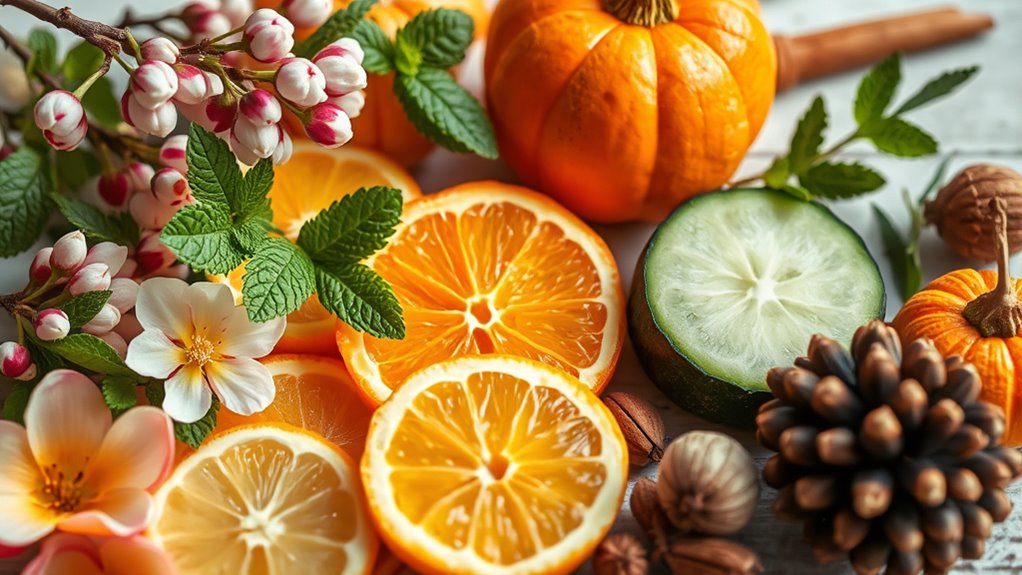

To enhance each season’s vibe, try spring with lavender, jasmine, or rose for renewal. Summer calls for citrus and tropical scents like orange, lemon, or coconut to boost energy. In fall, cozy up with cinnamon, clove, or cedarwood for warmth. Winter feels right with pine, eucalyptus, or frankincense for comfort and relaxation. Continuing your exploration reveals how to safely incorporate these scents into your seasonal routine for maximum benefits.

Get oils, diffusers and self-care delivered free with Prime
- Fast, free delivery on millions of items
- Prime Video, Amazon Music and more included
- Member-only deals all year
Key Takeaways
- Spring features floral scents like lavender, jasmine, and rose that evoke renewal and growth.
- Summer benefits from citrus and tropical aromas such as orange, lemon, lime, and coconut for vitality and energy.
- Fall is ideal for cozy, spicy, and earthy scents like cinnamon, clove, cedarwood, and pumpkin spice.
- Winter emphasizes calming fragrances like pine, eucalyptus, and frankincense to promote relaxation and warmth.
- Always use proper dilution and follow safety guidelines tailored to each season’s aromatic profile.
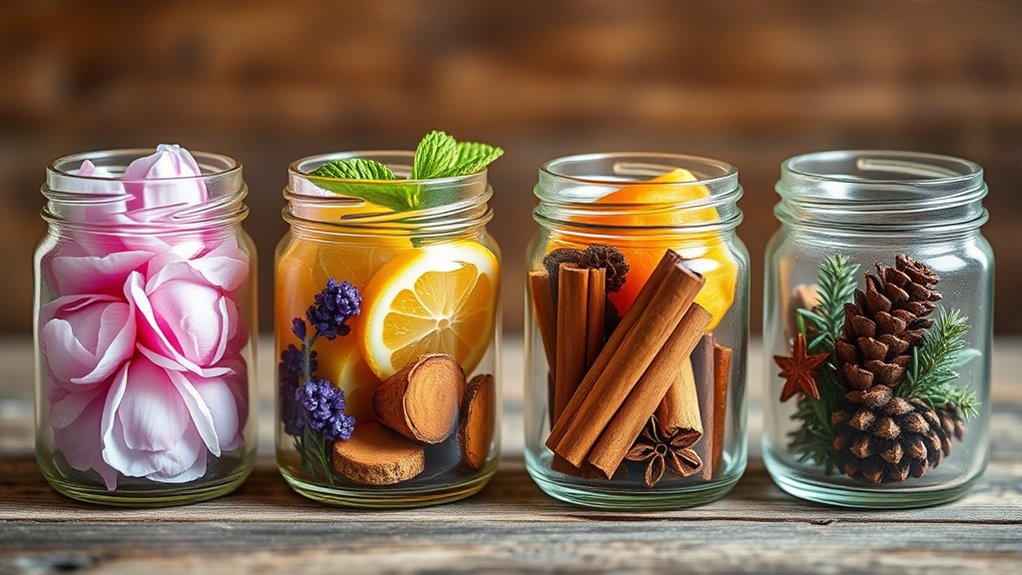
Have you ever noticed how certain scents seem to evoke the feelings of each season? Aromatherapy uses these scents to enhance your mood, improve well-being, and create a sense of harmony with the changing year. The benefits of aromatherapy are well-documented; it can boost your energy, reduce stress, and promote relaxation. But it’s equally important to prioritize essential oil safety when using these aromatic remedies. Proper dilution and knowledge about each oil help prevent skin irritation, allergic reactions, or other adverse effects. You want to enjoy the benefits without risking your health, so always follow recommended guidelines and consult a professional if you’re unsure. Staying informed about legislative changes related to essential oils and aromatherapy products can also help ensure safe usage. In spring, fresh, floral scents like lavender, jasmine, and rose are perfect. These aromas evoke renewal, growth, and new beginnings, aligning with the season’s spirit. Lavender is especially versatile, known for its calming properties, helping you shake off winter’s sluggishness and embrace the blooming season. When using essential oils in spring, ensure you dilute them properly, especially if applying topically, to avoid skin sensitivities. Keep in mind that some oils, like jasmine, can be potent and should be used sparingly. Incorporating diffusers and sprays into your routines can help distribute these fragrances safely and effectively, enhancing your seasonal environment. Summer calls for invigorating, citrusy, and tropical scents like orange, lemon, lime, and coconut. These scents evoke warmth, vitality, and outdoor fun. They can uplift your mood during hot days and help you feel more energized. When using citrus oils, be aware of phototoxicity—some oils can make your skin more sensitive to sunlight, increasing the risk of burns or irritation. To stay safe, dilute citrus oils well and avoid direct sun exposure immediately after application. Summer aromatherapy isn’t just about scent; it’s about creating a revitalizing atmosphere. Use diffusers, scented mists, or topical blends, but always check essential oil safety tips to prevent skin reactions or photosensitivity issues. Fall brings cozy, spicy, and earthy aromas like cinnamon, clove, cedarwood, and pumpkin spice. These scents evoke comfort, warmth, and nostalgia, making them ideal for the season’s introspective mood. Cinnamon and clove, for example, can stimulate feelings of warmth and help combat seasonal blues. When working with these oils, remember that they are quite potent—dilution is key. Use them in moderation, especially if diffusing throughout your home, to avoid overwhelming your senses. As always, stick to safety guidelines, especially if you have allergies or respiratory sensitivities, and consult professional advice when trying new oils. Winter fragrances like pine, eucalyptus, and frankincense evoke the quiet, contemplative nature of the season. These scents promote clarity, calmness, and a sense of grounding. Eucalyptus, in particular, can help clear your sinuses during cold months, but it’s essential to use it properly—diluted and not in excessive quantities. Fragrances like frankincense can be used in meditation or relaxation routines, but always ensure you’re using high-quality oils and practicing essential oil safety. Proper use of these scents can turn your space into a cozy sanctuary, supporting your health and emotional well-being through the season’s chill.
essential oil diffuser for spring
As an affiliate, we earn on qualifying purchases.
As an affiliate, we earn on qualifying purchases.
Frequently Asked Questions
How Do Seasonal Scents Affect Mood and Emotional Well-Being?
Seasonal scents influence your mood and emotional regulation by triggering specific feelings. When you smell fresh citrus in summer, it boosts your energy and promotes positivity. In winter, warm scents like cinnamon comfort and calm you. These aromas aid in mood enhancement, helping you manage stress and emotional balance throughout the year. By choosing scents aligned with the season, you can naturally support your emotional well-being and create a more balanced, positive mindset.
Can Seasonal Aromatherapy Help With Seasonal Affective Disorder (SAD)?
You might find seasonal aromatherapy helpful for SAD by supporting mood regulation and creating a comforting environment. Using personalized scents that resonate with you can lift your spirits during darker months. While it’s not a cure, incorporating seasonal fragrances like citrus or lavender can boost emotional well-being and help manage symptoms. Experiment with different scents to discover what works best for your mood and make your space more uplifting year-round.
Are There Any Safety Concerns With Using Seasonal Essential Oils?
You might think essential oils are completely safe, but ignoring safety can lead to serious issues. Always dilute your essential oils properly—exaggerate it!—to prevent skin irritation or scent sensitivity. Some oils can cause allergic reactions or interact with medications. Never apply undiluted oils directly to your skin, and do a patch test first. Keep them out of reach of children and pets. Safety is key to enjoying aromatherapy without worries.
How Long Do the Effects of Seasonal Aromatherapy Typically Last?
The duration effects of seasonal aromatherapy vary based on the scent and application method. Usually, you can expect the scent longevity to last between a few hours to several hours. To maximize the benefits, you might need to reapply or use diffusers regularly. Keep in mind that individual factors like ventilation and skin absorption influence how long the effects stay, so adjusting your use guarantees you enjoy the desired aroma and effects longer.
Can Seasonal Scents Be Customized for Individual Preferences?
Ever wondered if you can tailor seasonal scents to match your personal preferences? Absolutely! You have the power to create customizable aromatherapy blends that suit your unique taste and mood. By choosing specific essential oils, you can craft scents that resonate with you year-round, making your experience more enjoyable and personalized. Isn’t it wonderful to have control over your sensory environment and enhance your well-being?
Conclusion
As you explore these seasonal scents, you might find yourself unexpectedly drawn to certain aromas that perfectly match the time of year. It’s funny how a fresh spring breeze or a cozy winter evening can suddenly make a specific scent feel like it was made just for that moment. Keep experimenting and paying attention—you might discover that your favorite seasonal aroma appears right when you least expect it, turning everyday moments into little sensory surprises.
Columbus Day / Indigenous Peoples' Day Picks
long weekend sales
As an affiliate, we earn on qualifying purchases.