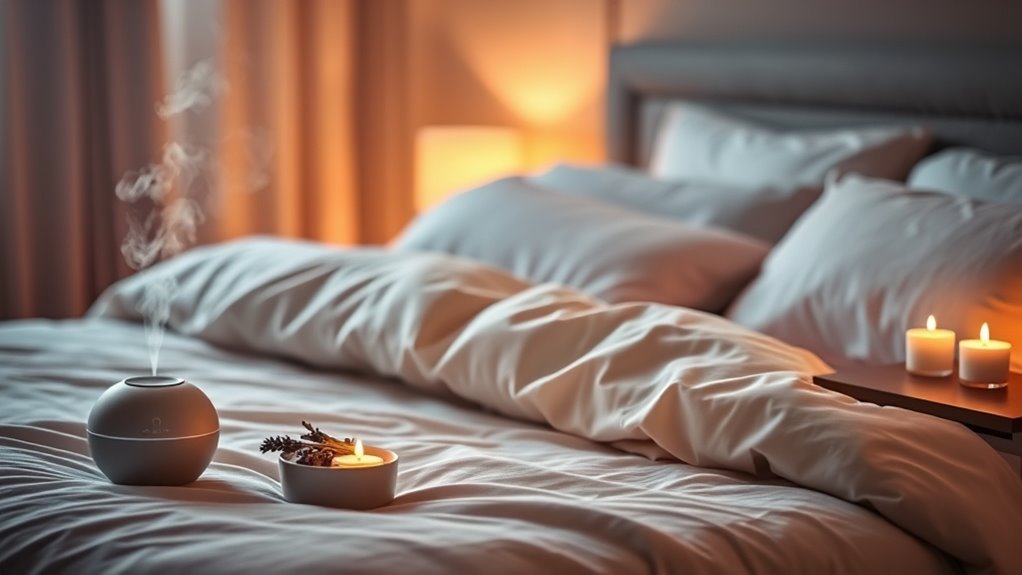

To improve sleep with aromatherapy beyond a diffuser, apply essential oils directly to your pillowcase, sleep mask, or pulse points like your wrists and temples. Dilute oils with carrier oils to prevent irritation, and spritz a gentle mist on your sheets before bed. Using high-quality, pure oils adds extra effectiveness. Incorporating these simple actions into your nightly routine can create calming cues, helping you relax more deeply—discover more tips to transform your sleep environment.
Key Takeaways
- Apply essential oils like lavender directly to pillowcases or sleep masks for close-to-skin aromatherapy.
- Massage diluted oils onto pulse points such as wrists, temples, or chest to promote relaxation.
- Spritz bedding with water infused with calming essential oils before bedtime for a subtle scent.
- Incorporate essential oils into relaxing pre-sleep baths to soothe muscles and calm the mind.
- Use high-quality, pure oils and consistent routines to maximize aromatherapy’s sleep-enhancing benefits.
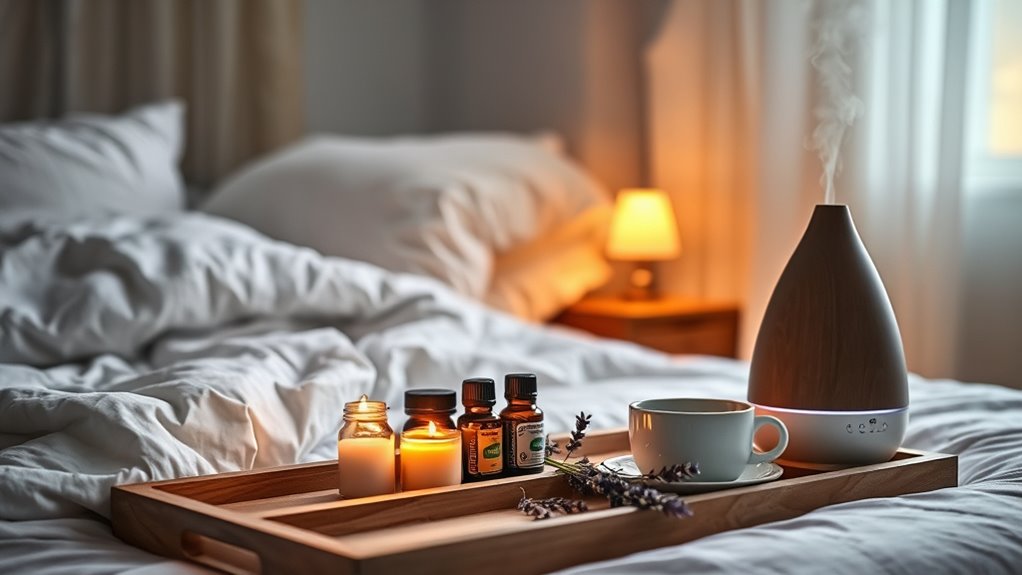
Have you ever wondered if scents can help you sleep better? Many people overlook how essential sleep hygiene is to achieving restful nights, but incorporating aromatherapy routines into your nightly habits could make a significant difference. Sleep hygiene refers to the practices and environment you create to promote good sleep, and scents are a simple yet powerful way to enhance this. While using a diffuser is popular, there are plenty of other ways to incorporate aromatherapy into your bedtime routine that don’t involve gadgets.
One effective approach is to apply essential oils directly to your skin or bedding. You might add a few drops of lavender oil to your pillowcase or sleep mask. The scent gradually releases as you rest, creating a calming atmosphere that signals your brain it’s time to wind down. This method is especially beneficial because it allows the aroma to stay close to your nose throughout the night, reinforcing your aromatherapy routines without needing a diffuser or other equipment. Always dilute essential oils with a carrier oil to avoid skin irritation, and choose high-quality, pure oils for the best results.
Applying lavender oil to your pillowcase creates a soothing, close-to-skin aroma that enhances relaxation all night.
Another simple tactic is to incorporate aromatherapy into your pre-sleep rituals. For example, prepare a relaxing bath with a few drops of chamomile or ylang-ylang essential oil. The warm water combined with soothing scents relaxes your muscles and calms your mind, setting the stage for sleep. Afterward, you can massage a small amount of oil onto your temples, wrists, or chest. These areas have pulse points that help disperse the scent more effectively, making your aromatherapy routines more impactful.
You can also infuse your bedding with calming scents by spritzing a gentle mist made with water and a few drops of essential oil onto your sheets before bedtime. This creates a subtle aroma that lingers without overwhelming your senses. Pair this with consistent sleep hygiene practices like maintaining a regular bedtime, limiting screen time before bed, and ensuring your sleep environment is cool, dark, and quiet. Incorporating air purification strategies, such as using an air purifier to reduce airborne pollutants, can further enhance your sleep environment. Combining these strategies helps your brain associate specific scents with relaxation, strengthening their effectiveness over time.
Incorporating aromatherapy routines into your nightly habits doesn’t require elaborate setups or expensive equipment. Small, intentional actions—like applying a scented oil, enjoying a calming bath, or spritzing your bedding—can reinforce your sleep hygiene and create a more peaceful sleep environment. When integrated thoughtfully, these simple scent-based practices become powerful tools for winding down and improving your overall sleep quality.
Frequently Asked Questions
Can Aromatherapy Replace Prescription Sleep Aids Safely?
You wonder if aromatherapy can replace prescription sleep aids safely. While it offers natural alternatives, it’s not a guaranteed substitute, especially for severe insomnia. Aromatherapy generally has fewer dependency concerns, but it’s crucial to consult your healthcare provider before making changes. Relying solely on aromatherapy might not address underlying issues, so consider it as part of a broader sleep improvement plan rather than a complete replacement for prescribed medications.
Are There Any Side Effects From Using Essential Oils for Sleep?
You might think essential oils are completely safe, but they can come with drowsiness side effects or allergy risks if you’re sensitive. Some oils, like lavender, can make you overly sleepy or cause skin irritation. Always do a patch test and use in moderation. If you notice any adverse reactions, stop use immediately. Essential oils are powerful, so respect their potency to enjoy safe, restful sleep.
Which Essential Oils Are Best for Children or Pregnant Women?
When choosing essential oils for children or pregnant women, opt for child-safe oils and pregnancy-friendly blends. Lavender and chamomile are gentle options that promote relaxation without risks. Always dilute oils properly and consult a healthcare provider before use. Avoid strong or irritating scents like peppermint or eucalyptus, which may cause adverse reactions. Using safe oils helps you create a calming environment while ensuring safety for little ones and expecting mothers.
How Long Does It Take to Notice Sleep Improvements With Aromatherapy?
You might wonder how quickly aromatherapy will transform your sleep, and honestly, timing expectations vary wildly. Some notice calmer nights within minutes, while others need weeks for full benefits. It all depends on your individual response and consistency. Stick with it, use quality oils, and give your body time to adapt. Patience is key—your perfect sleep might be just a few days or weeks away, but persistence pays off.
Can Aromatherapy Be Combined With Other Sleep Improvement Techniques?
You can absolutely combine aromatherapy with other sleep improvement techniques. Complementary therapies like meditation or gentle stretching work well alongside aromatherapy, enhancing relaxation. Maintaining good sleep hygiene—like sticking to a consistent sleep schedule and avoiding screens before bed—boosts your chances of restful sleep. Using these strategies together creates a holistic approach, making it easier for you to fall asleep faster and enjoy better quality sleep overall.
Conclusion
Ready to embrace gentle whispers of tranquility each night? While aromatherapy offers a soothing path to restful slumber, remember that a peaceful bedtime isn’t just about scents—it’s about nurturing your entire well-being. So, explore these fragrant secrets with an open heart and mind, and let them gently guide you to a more restful, restorative sleep. Sweet dreams await when you trust in this subtle art of calm—your nightly retreat to serenity begins now.