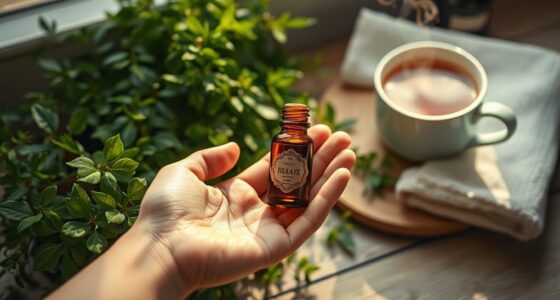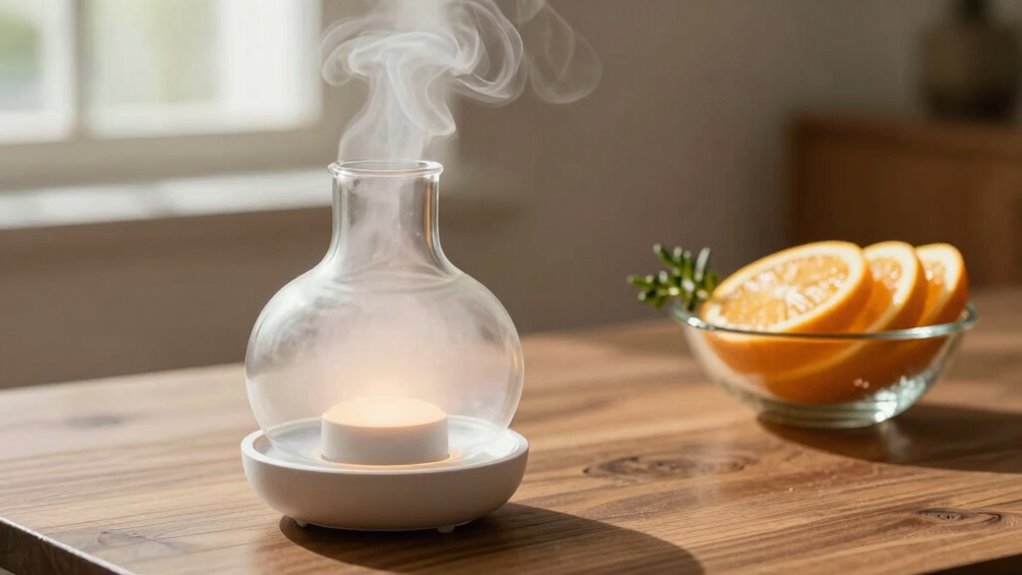
To use aroma anchors effectively, choose scents that evoke calm, focus, or other desired states, like lavender or citrus. Consistently diffuse or inhale the scent at the same point in your routine, such as before meditation or work. Focus on the scent to strengthen the neural connection with your mental goal. Over time, this aroma becomes a cue to quickly access that state, making your habits easier to establish and maintain. Keep exploring how to build these powerful associations.

Get oils, diffusers and self-care delivered free with Prime
- Fast, free delivery on millions of items
- Prime Video, Amazon Music and more included
- Member-only deals all year
Key Takeaways
- Select calming or invigorating scents aligned with your habit goals and introduce them consistently at the same routine point.
- Diffuse or inhale the scent just before engaging in the new habit to create a strong sensory association.
- Repeatedly pair the scent with the activity to reinforce neural pathways and strengthen the mental connection.
- Use the aroma as a quick cue to enter desired mental states during moments of distraction or stress.
- Practice patience and consistency, allowing the scent to become an automatic trigger for your new habits over time.
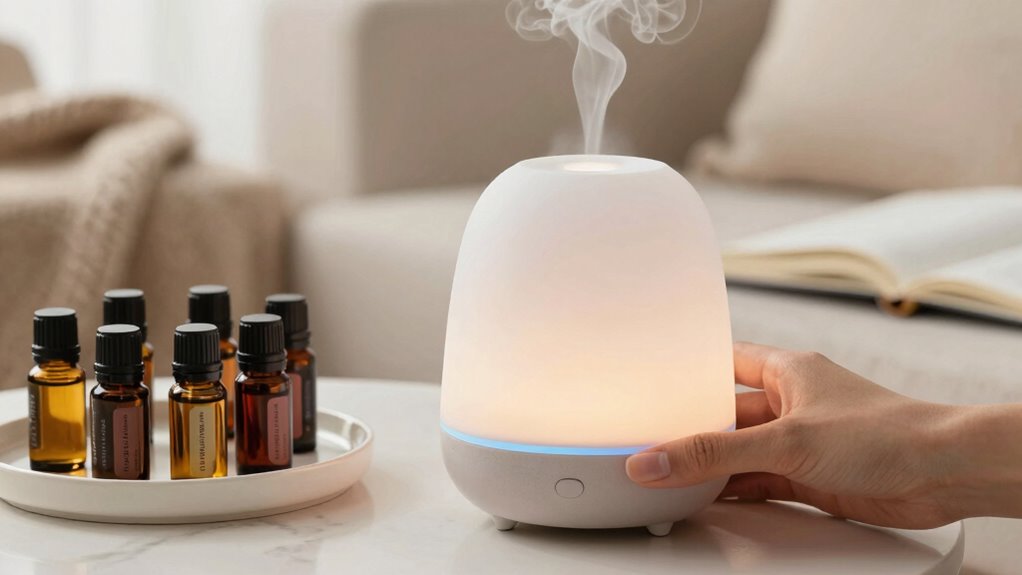
Aroma anchors are powerful tools for enhancing your meditation, relaxation, or focus routines. When used intentionally, they create a strong sensory association between the scent and your desired habit, making it easier to access that mental state over time. The key lies in consistent use; every time you engage in your new habit, you introduce the same aroma. This consistency helps your brain link the scent with the activity, reinforcing the habit through sensory association. Over days and weeks, the aroma becomes a cue that signals your mind to settle into that specific mindset, whether it’s calmness, concentration, or mindfulness. Creating sensory associations through aroma anchoring is a natural way to support sustainable living practices by promoting mental clarity and emotional balance.
To effectively establish an aroma anchor, start by choosing a scent that feels calming, invigorating, or aligning with your goal. It could be lavender for relaxation, citrus for alertness, or eucalyptus for clarity. When you’re ready to begin your habit, introduce the aroma at the same point every time. For example, if you’re trying to develop a meditation practice, diffuse your chosen scent just before you sit down. As you breathe in the aroma, focus on the sensation of the scent, allowing it to become intertwined with your experience. This repeated pairing helps your brain form a sensory association, making the scent a natural trigger for relaxation or focus in the future. Incorporating habit formation techniques can further enhance the effectiveness of your aroma anchors.
Choose a calming or invigorating scent and introduce it consistently to build a powerful mental cue.
Consistency is essential because it reinforces the habit. Each time you use the aroma, you strengthen the neural pathways connecting the scent to your desired mental state. Over time, this process creates powerful neural associations that make it easier to slip into that state simply by smelling the aroma, even if you’re pressed for time or feeling distracted. Understanding the science of sensory cues can help you select the most effective scents for your personal needs and goals. Additionally, being aware of neural plasticity emphasizes how adaptable your brain is and how quickly these associations can be formed and strengthened.
Habit reinforcement through aroma anchors isn’t just about the scent itself; it’s about creating a reliable signal that your brain recognizes. This process accelerates your ability to enter a focused, relaxed, or mindful state because the scent acts as a shortcut to that mental space. With patience and consistent practice, you’ll find that your aroma anchor becomes a valuable part of your routine, effortlessly supporting your new habits and helping you maintain consistency. Over time, the sensory association solidifies, making it easier to access your desired state in any setting—simply by inhaling your chosen aroma.
As an affiliate, we earn on qualifying purchases.
Frequently Asked Questions
Can Aroma Anchors Be Used for Emotional Regulation?
Yes, aroma anchors can help with emotional regulation by promoting emotional stability and stress management. When you consistently associate a specific scent with calming or uplifting feelings, your brain links that aroma to those emotions. Over time, smelling that scent during stressful moments can trigger a sense of calm and balance, making it a powerful tool for managing emotions and maintaining stability in challenging situations.
How Long Does It Take for Aroma Anchors to Become Effective?
They say, “Rome wasn’t built in a day,” and the same applies here. Aroma anchors start working in as little as a few days, but for lasting effect, it usually takes about 2-4 weeks of consistent use. This time allows your sensory memory to associate the scent with your desired habit, reinforcing habit formation. Patience and repetition are key to making aroma anchors truly effective.
Are There Any Safety Concerns With Essential Oils Used as Anchors?
Yes, there are safety concerns when using essential oils as anchors. You should always consider essential oil safety by diluting oils properly and avoiding skin contact with concentrated oils. Be aware of allergen precautions, as some oils can trigger allergies or irritations. Always do a patch test first, and consult with a healthcare professional if you’re pregnant, nursing, or have underlying health conditions to guarantee safe use.
Can Aroma Anchors Be Combined With Other Habit-Forming Techniques?
Yes, you can combine aroma anchors with other habit-forming techniques, creating a symphony of sensory association that strengthens your habit reinforcement. Think of aroma anchors as anchors in a ship’s hull, steadying your progress, while techniques like visualization or habit stacking add layers of reinforcement. Together, they weave a powerful fabric of change, engaging your senses and mind simultaneously, making your new habits more resilient and easier to sustain.
What Scents Are Most Effective for Establishing New Habits?
You find that scents for focus like peppermint or citrus invigorate your mind, making them effective for establishing new habits. Aromatherapy for motivation often uses scents like rosemary or eucalyptus, boosting energy and drive. To create a strong aroma anchor, consistently use these scents during your habit-forming activities. Over time, your brain associates these invigorating smells with the new behavior, helping you stay committed and motivated.
Conclusion
By using aroma anchors, you’re planting tiny scent seeds that grow new habits effortlessly. Think of each aroma as a lighthouse guiding your behavior through foggy days, illuminating your path to change. When you associate a specific scent with your desired action, you create a powerful mental shortcut—like a key opening a door. Embrace this aromatic compass, and watch your habits flourish as naturally as flowers turning toward the sun.
Fall Picks
fall essentials
As an affiliate, we earn on qualifying purchases.