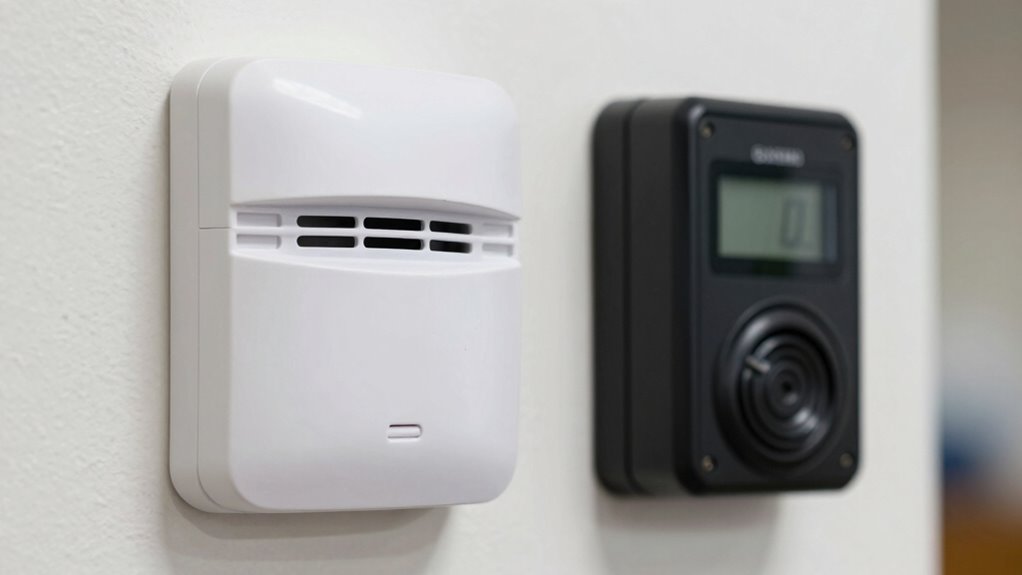

Carbon monoxide (CO) detectors and smoke detectors play crucial roles in home safety, but they serve different purposes. CO detectors alert you to invisible, odorless CO gas, preventing poisoning, especially near sleeping areas. Smoke detectors warn you of fire or smoke, giving early alerts to save lives. Proper placement, maintenance, and understanding these devices can make all the difference—keep going to discover how to use and care for each effectively.
Key Takeaways
- Carbon monoxide detectors identify colorless, odorless CO gas, whereas smoke detectors detect visible smoke particles from fires.
- CO detectors are best placed near sleeping areas and on every floor, while smoke detectors should be on ceilings or high walls across all home levels.
- Regular testing, battery replacement, and replacement every 5-7 years are essential for CO detectors; smoke detectors typically last 10 years.
- CO detectors alert to dangerous gas buildup that can cause poisoning, while smoke detectors warn of fire and smoke hazards.
- Proper installation, maintenance, and awareness of each detector’s purpose significantly enhance home safety and save lives.
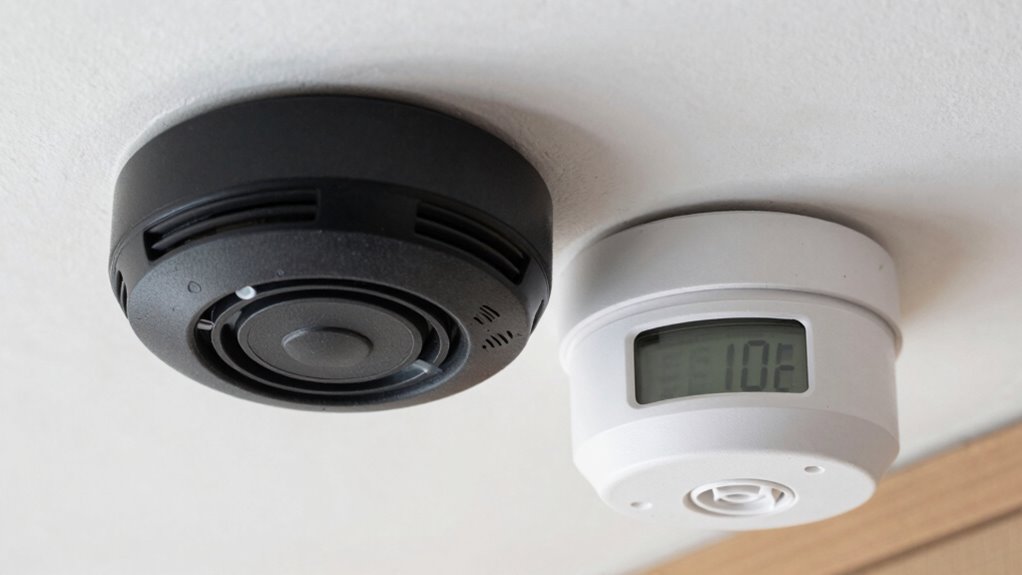
Many homeowners understand the importance of safety devices, but they often confuse carbon monoxide detectors with smoke detectors. While both are essential for protecting your family, they serve different purposes and require different considerations, especially when it comes to alarm placement and detector maintenance. Understanding these differences helps guarantee you’re effectively safeguarding your home against potential dangers.
When it comes to alarm placement, you should position smoke detectors on every level of your home, especially in hallways, bedrooms, and near the kitchen. Smoke rises, so installing detectors on the ceiling or high on walls ensures early warning in case of fire. Carbon monoxide detectors, on the other hand, should be placed near sleeping areas and on every floor, including the basement. Since CO is a colorless, odorless gas that mixes with the air, placing detectors at nose level or slightly higher is ideal for catching the gas before it reaches dangerous levels. Avoid installing either detector too close to vents, fans, or windows, as drafts can interfere with their sensitivity and accuracy.
Detector maintenance is essential for both types of devices. For smoke detectors, you should test them monthly, change batteries at least once a year, and replace the entire unit every 10 years. Carbon monoxide detectors require similar attention: test them monthly, replace batteries annually, and swap out the detector itself every five to seven years, depending on the manufacturer’s guidelines. Regular maintenance guarantees your detectors function properly when needed most. Dust and debris can interfere with sensor operation, so gently vacuum or dust the units periodically. Additionally, understanding the sensor technology used in your detectors can help you better interpret their signals and lifespan.
Additionally, it’s imperative to read and follow the manufacturer’s instructions for each device, as some models have specific maintenance or placement requirements. Keep in mind that alarms are only effective if they’re functioning correctly, so scheduling routine checks and replacements is key. If an alarm sounds, don’t ignore it—immediately evacuate the home and call emergency services if you suspect carbon monoxide exposure or see signs of fire.

Kidde Carbon Monoxide Detector, Plug-in with AA Battery Backup, Easy-to-Read Digital Backlit Display, 85 dB Alarm, Rotating Plug, LED Status Light Indicators, 5th Edition, COPD
- CO Detection with Digital Display: Shows CO levels and alarms loudly
- Plug-in Power with Backup: Operates on 120V with AA backup batteries
- Rotating Plug Design: Fits vertical or horizontal outlets
As an affiliate, we earn on qualifying purchases.
As an affiliate, we earn on qualifying purchases.
Frequently Asked Questions
How Often Should I Test My CO and Smoke Detectors?
You should test your CO and smoke detectors once a month to guarantee they’re working properly. Check the battery life during these tests, replacing batteries at least once a year or when the detector chirps. Proper detector placement is essential—install smoke detectors on every level and CO detectors near sleeping areas. Regular testing keeps your safety devices reliable, giving you peace of mind in case of emergencies.
Can a Smoke Detector Also Detect Carbon Monoxide?
Sure, smoke detectors don’t detect carbon monoxide because they sense smoke particles, not gas. To stay safe, place detectors properly, at recommended heights, and replace batteries regularly. Remember, a smoke detector alerts you to fire, but a dedicated carbon monoxide detector is essential for detecting deadly CO leaks. Keep both devices in your home for complete safety, testing them monthly and changing batteries at least once a year.
Are There COmbination CO and Smoke Detectors Available?
Yes, you can find combination units that detect both carbon monoxide and smoke. These multi sensor technology devices combine sensors for both hazards in one unit, making it easier to protect your home. By installing combination CO and smoke detectors, you get thorough safety coverage, reducing the need for multiple devices. Make sure you choose a dependable model that meets safety standards for ideal protection and peace of mind.
What Maintenance Is Required for CO Detectors?
If you think your CO detector is a set-it-and-forget-it device, think again. You need to replace the batteries regularly—usually once a year—and follow placement guidelines to guarantee peak detection. Check the device monthly for dust or obstructions, and test it weekly with the test button. Proper maintenance keeps it alert and ready, so you don’t have to become a hero when it really matters.
Do Different Rooms Need Different Types of Detectors?
You should use room-specific detectors based on each area’s risks, like installing a carbon monoxide detector near your furnace or garage and smoke detectors in bedrooms and hallways. Proper detector placement is vital—place smoke detectors on ceilings and CO detectors at eye level or slightly lower. Different rooms need different detectors to guarantee maximum safety, so tailor your choices to each space’s specific hazards.
Conclusion
Just as the hero’s shield guards against unseen threats, your CO and smoke detectors protect your home and loved ones. Recognizing their differences guarantees you’re always prepared, much like knowing the difference between a sword and a shield in battle. Don’t wait for tragedy to strike—install and maintain both detectors diligently. Remember, in the fight against danger, awareness is your greatest weapon, turning your home into a fortress against silent, deadly enemies.