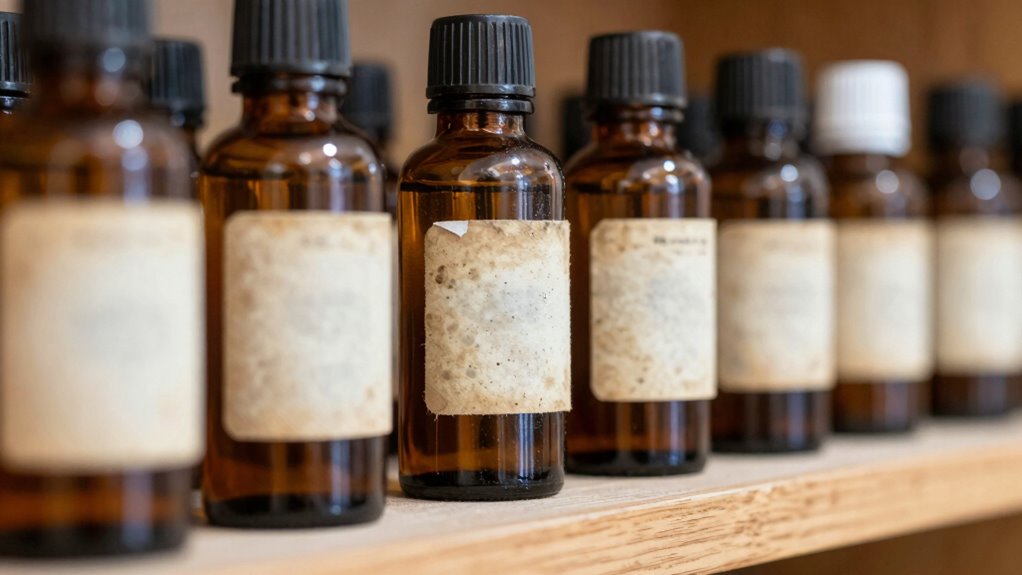
Essential oils can go bad quietly, often showing subtle signs of oxidation that many overlook. You might notice a duller scent, a change in color, or a cloudy appearance, indicating your oil is aging. Reduced aroma strength and a thicker or darker look also signal deterioration. To keep your oils fresh, pay close attention to these cues. Keep exploring to discover more tips on spotting oxidation early and preserving your oils’ potency.
Key Takeaways
- Oxidized oils often lose their vibrant aroma and may develop a dull, stale scent that indicates degradation.
- Color changes, such as darkening or cloudiness, are subtle signs of oxidation that can be easily overlooked.
- A thickened or cloudy appearance suggests chemical breakdown, even if the smell still seems acceptable.
- Reduced potency, with a weaker or different aroma, signals that the oil is aging and may have oxidized.
- Regularly inspecting visual and olfactory cues helps detect oxidation early before oils become unusable.
Essential oils are prized for their therapeutic properties, but they can deteriorate over time through a process called oxidation. This natural reaction occurs when the oils are exposed to air, light, heat, or contaminants, causing their beneficial compounds to break down. To preserve their potency, you need to pay attention to storage tips and understand the shelf life of each oil. Proper storage is your best defense against oxidation, and knowing how long your oils last helps you avoid using degraded products.
Essential oils degrade over time through oxidation; proper storage preserves their therapeutic potency.
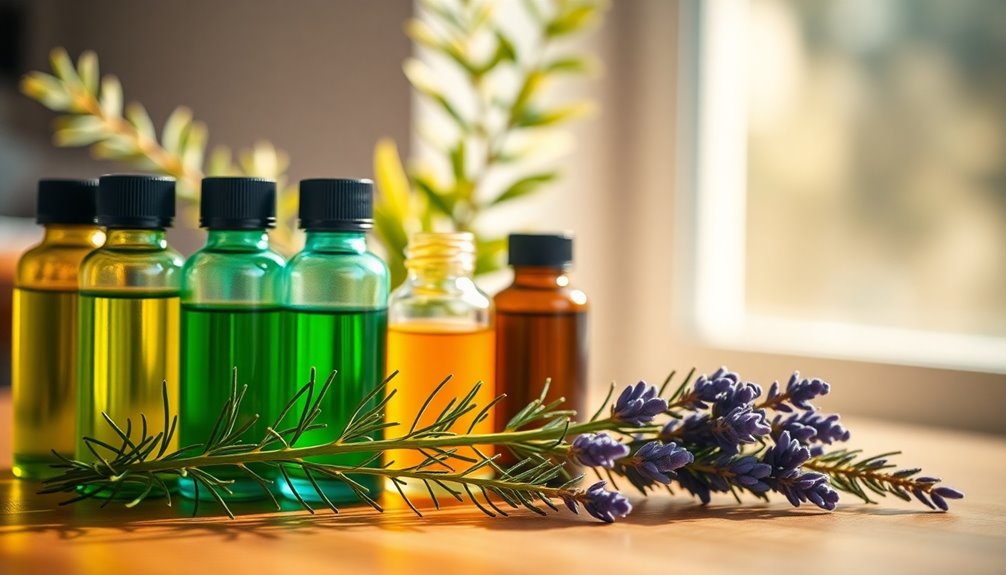
Your first step is to store your essential oils in a cool, dark place. Light and heat accelerate oxidation, so avoid keeping them near windows or heat sources like stoves or radiators. Use dark glass bottles—preferably amber or cobalt—to block harmful UV rays. Always keep the caps tightly sealed after each use to prevent air from sneaking in and speeding up oxidation. This simple step is vital because exposure to air is one of the biggest factors that cause oils to go bad quietly over time.
Understanding the shelf life of your essential oils is equally important. While some oils, such as citrus, have a shorter shelf life of about 6 to 12 months, others like sandalwood or patchouli can last several years if stored properly. As a general rule, check the manufacturer’s guidance for each specific oil, but also be alert to signs that your oils are aging. Proper storage techniques help extend shelf life, but even the best-kept oils will eventually degrade.
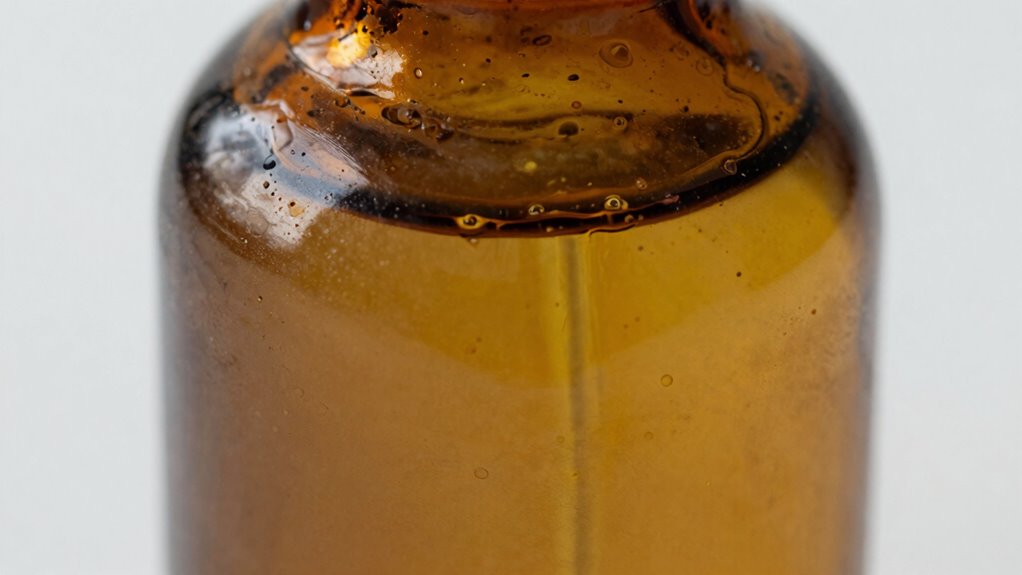
You should also pay close attention to the smell, color, and consistency of your oils. A fresh essential oil typically has a strong, pure aroma and a clear or slightly yellow hue. If you notice a duller scent, a change in color—such as cloudiness or darkening—or a thickened or cloudy appearance, it might be a sign that oxidation has set in. These subtle cues often go unnoticed but indicate that the oil’s chemical profile has shifted, reducing its therapeutic efficacy.
Finally, trust your senses. If an essential oil’s smell is off, sour, or rancid, it’s best to discard it. Don’t rely solely on expiration dates; instead, regularly inspect your collection and practice good storage tips to maximize their shelf life. By staying vigilant and understanding the signs of oxidation, you make sure you’re always using fresh, effective oils that deliver the benefits you seek.

4 Pack, 1 oz Thick Dark Amber Glass Dropper Bottles with 1 Funnels & 4 Labels – 30ml Tincture Bottles with Eye Dropper – Leakproof Essential Oils Bottle – Storage and Travel for Beauty or Health
Size – 1.3 inch wide, 4 inch height. 1 Ounce (30ml) Capacity.
As an affiliate, we earn on qualifying purchases.
As an affiliate, we earn on qualifying purchases.
Frequently Asked Questions
How Long Do Essential Oils Typically Last Before Oxidizing?
Essential oils usually last between 1 to 3 years before oxidizing, depending on storage conditions. You should check the shelf life on the bottle, as most oils have an expiration date printed on them. Properly stored in a cool, dark place, they stay fresh longer. Keep in mind, once the oils pass their expiration date, their scent and potency diminish, and they may oxidize, so it’s best to replace them when needed.
Can Improper Storage Accelerate Essential Oil Oxidation?
Yes, improper storage can definitely accelerate essential oil oxidation. If you expose oils to light, heat, or air, it damages their chemical compounds, shortening their shelf life. To prevent this, store your oils in cool, dark, airtight containers. Proper storage conditions help maintain their potency and extend shelf life, ensuring they stay fresh and effective for longer periods. Always keep oils away from direct sunlight and temperature fluctuations for best results.
Are There Specific Oils More Prone to Oxidation?
Some oils are more prone to oxidation, like citrus and floral varieties, which can age faster than others. You’ll notice that oils with synthetic additives or those diluted in carrier oils tend to deteriorate quicker, especially if exposed to light and heat. Keep them properly stored to prevent rapid oxidation—otherwise, even the most potent oils could turn rancid before you know it, losing their therapeutic benefits.
How Can I Prevent My Oils From Going Bad?
To keep your oils fresh longer, store them in a cool, dark place away from direct sunlight and heat. Always keep bottles tightly sealed to prevent oxidation, which can degrade oil freshness. Use dark glass bottles instead of clear ones, and avoid exposing oils to air. Regularly check for changes in aroma or color, and buy smaller quantities if you don’t use oils frequently, ensuring they stay potent and fresh.
Does Oxidation Affect the Therapeutic Properties of Essential Oils?
Oxidation definitely affects the therapeutic properties of your essential oils by reducing their potency and effectiveness. Poor storage conditions and exposure to air, light, or heat can compromise oil stability, making them less beneficial over time. To maintain their therapeutic benefits, always store your oils in dark, airtight containers in a cool, dry place. Proper storage helps slow oxidation, preserving the quality and effectiveness of your essential oils.
4 Pack, 1 oz Thick Dark Amber Glass Dropper Bottles with 1 Funnels & 4 Labels – 30ml Tincture Bottles with Eye Dropper – Leakproof Essential Oils Bottle – Storage and Travel for Beauty or Health
Size – 1.3 inch wide, 4 inch height. 1 Ounce (30ml) Capacity.
As an affiliate, we earn on qualifying purchases.
As an affiliate, we earn on qualifying purchases.
Conclusion
To protect your oils, stay alert to their subtle changes. Smell for off or stale notes, notice any cloudiness or change in color, and feel for a different texture or viscosity. Recognize the signs of oxidation, and act before quality declines. Preserve freshness, safeguard your health, and enjoy the true benefits of your oils. Because when you pay attention, you guarantee their purity, their potency, and their power to uplift your well-being.

Brake Fluid Tester, Auto Brake Diagnostic Testing Tool, Hydraulic Fluid/Liquid/Oil Moisture Analyzer with 9 LED Indicators for DOT3/DOT4/DOT5.1 Brake Fluid(BF100)
【Support all kinds of Cars】KINGBOLEN Brake Fluid Tester can be used on all cars; It is easy-to-use and…
As an affiliate, we earn on qualifying purchases.
As an affiliate, we earn on qualifying purchases.

Hipiwe 120 Bottle EVA Essential Oil Storage Carrying Case Hard Shell Exterior Essential Oils Organizer Holder Traveling Bag with Foam Insert, Holds 5ml 10ml 15ml Essential Oils (X-Large, Black+Purple)
Product Info – Size(LxWxH) 16.1" x 3.5"x 13.3" ; Package includes:1 x 120 Slot EVA Essential Oils Carrying…
As an affiliate, we earn on qualifying purchases.
As an affiliate, we earn on qualifying purchases.