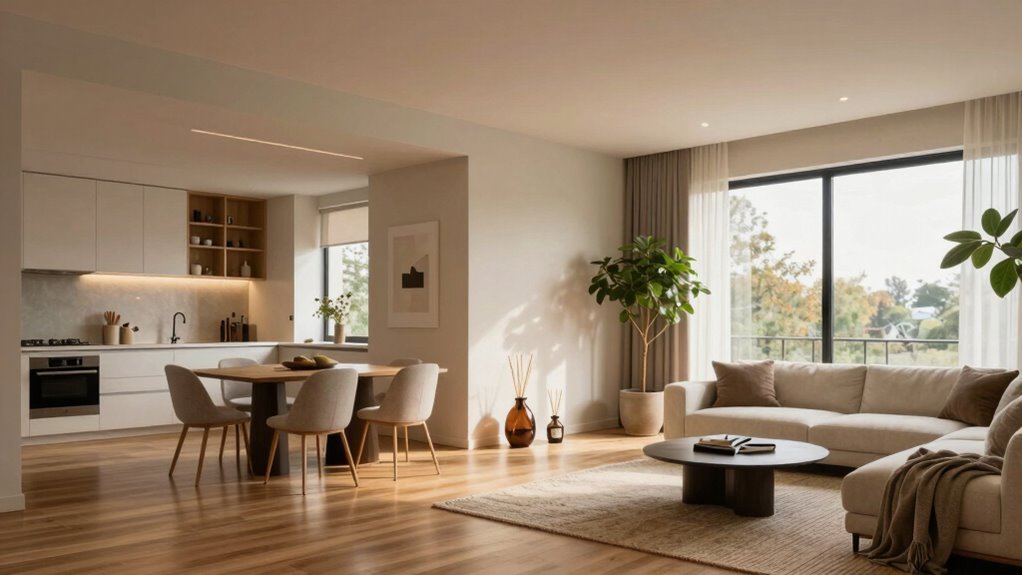

In open-concept homes, odors from cooking, pets, and daily activities can spread quickly and linger. To combat this, use scent zoning by placing diffusers or candles in specific areas like the living room or kitchen, combined with good air circulation through exhaust fans and strategically positioned fans. This balance helps contain odors and keeps your space feeling fresh. Keep exploring for more tips on creating a harmonious, odor-free environment that works seamlessly with your open layout.
Key Takeaways
- Implement scent zoning by placing diffusers or candles in specific areas to contain odors.
- Maximize air circulation with exhaust fans and strategically positioned fans to prevent stagnant smells.
- Use natural scent masking methods like essential oils and candles for subtle, pleasant fragrances.
- Combine localized scent zones with effective ventilation to maintain a balanced, fresh environment.
- Regularly monitor and adjust airflow and scent placement to optimize odor control in open-concept layouts.
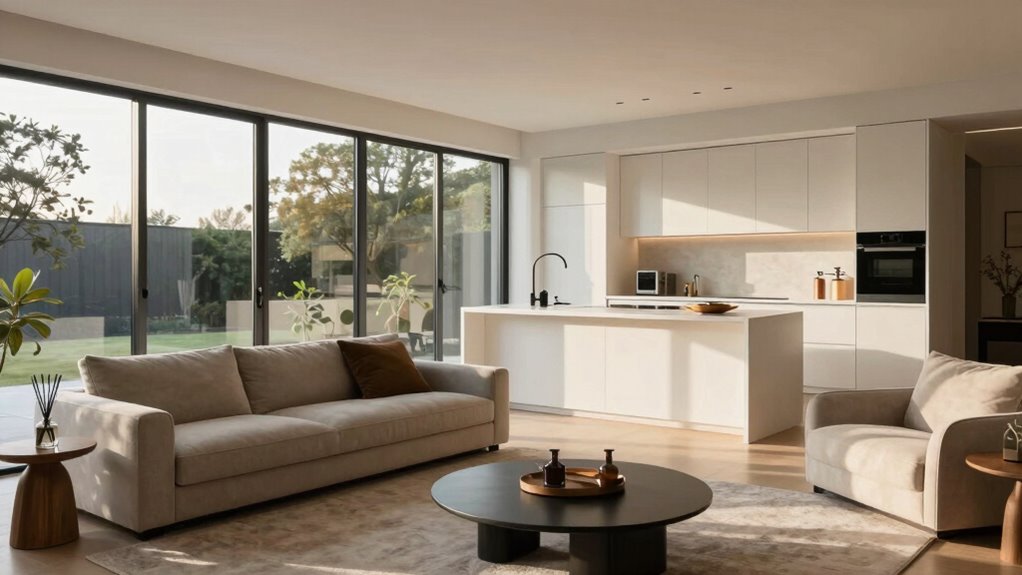
Open-concept homes create a spacious, airy feeling, but they can also pose challenges when it comes to controlling scents. Without clear boundaries, odors from cooking, pets, or even everyday activities spread easily throughout the space. The key to managing these smells lies in understanding air circulation and scent masking. Proper air circulation ensures that unwanted odors don’t linger in one area, while scent masking techniques help neutralize or cover up persistent smells.
To improve air circulation, you want to make sure your ventilation system is up to date and functioning well. Use exhaust fans in the kitchen and bathrooms to vent odors outside effectively. Consider installing ceiling fans or portable fans strategically to promote consistent airflow. Good air movement prevents stagnant pockets of smell from building up in corners or behind furniture. When you enhance air circulation, you’re not only reducing lingering scents but also creating a fresher environment overall.
Enhance air circulation with proper ventilation and fans for a fresher, odor-free open-concept home.
Scent masking plays an essential role in maintaining a pleasant ambiance. Instead of just trying to hide odors, use natural scent masking methods like essential oils, diffusers, or candles with calming fragrances. These help to create a neutral scent baseline that’s more inviting and less overpowering. Be mindful of strong air fresheners or synthetic scents, which can sometimes clash with natural odors or cause sensitivities. Instead, opt for subtle, consistent scenting that complements the open space without overwhelming it. Additionally, understanding air circulation principles can help you better design your scent zoning strategy.
Another effective approach is zoning your scent management. For example, you can designate specific areas with localized scent control, such as a diffuser in the living room or a scented candle in the dining area. This way, if an odor arises from cooking or pets, it won’t dominate the entire open space. Combining scent masking with good air circulation techniques results in a balanced environment where smells are minimized and the air feels fresh and inviting.

InnoGear Essential Oil Diffuser Ultrasonic Diffusers for Home, Basic White
- Trusted Brand with Quality Assurance: Over 10 years of diffuser expertise
- Ultrasonic Nano Mist Technology: Emits fine, chemical-free mist
- Two Misting Modes: Intermittent and continuous mist options
As an affiliate, we earn on qualifying purchases.
As an affiliate, we earn on qualifying purchases.
Frequently Asked Questions
Can Scent Zoning Work in Multi-Story Open-Concept Homes?
Yes, scent zoning can work in multi-story open-concept homes. You should focus on airflow management by installing fans or vents to direct scent diffusion away from common areas and toward designated zones. Using strategic air purifiers and scent diffusers on different floors helps control odors effectively. With proper airflow management and scent diffusion techniques, you can maintain a fresh, balanced scent throughout your multi-story open-concept space.
What Are the Best Scents for Different Open-Concept Areas?
Imagine walking into your living room and feeling relaxed from lavender aroma therapy, while the kitchen smells fresh with citrus. For open-concept areas, you should use scent layering—start with subtle base scents like vanilla or cedar, then add targeted aromas like peppermint or lemon for specific zones. This technique helps create a balanced, inviting atmosphere, preventing scent clash and ensuring each space smells just right.
How Do I Prevent Scent Transfer Between Zones?
To prevent scent transfer between zones, you should focus on airflow control and scent barriers. Use doors or partitions to block airflow, and consider installing draft stoppers or door sweeps to contain scents. Additionally, strategic placement of vents and fans helps direct airflow, preventing scents from spreading. Regularly clean air filters and choose specific scents for each zone to maintain distinct atmospheres and reduce scent transfer effectively.
Is Scent Zoning Effective for Allergy Sufferers?
You bet scent zoning works for allergy sufferers. It’s like hitting two birds with one stone — air purifiers benefit your space by removing allergens and scent masking keeps problematic smells at bay. By creating designated zones, you prevent allergen transfer, making your home more comfortable. Proper scent zoning isn’t just about smell; it’s about breathing easier and reducing allergy triggers across different areas.
What Equipment Is Needed for Scent Zoning in Open Homes?
You’ll need air purification devices and scent diffusion equipment to implement scent zoning effectively. Air purifiers help remove unwanted odors and allergens, creating a clean environment. Scent diffusers distribute pleasant fragrances in specific zones, maintaining a balanced scent throughout your open home. Position these devices strategically to target different areas, ensuring consistent scent coverage and allergy relief. This combination allows you to control scents and improve overall air quality seamlessly.
Conclusion
By implementing scent zoning, you can transform your open-concept home into a fragrant sanctuary, much like a well-orchestrated symphony. Think of each zone as a different instrument contributing to a harmonious aroma that welcomes you and your guests. With a few simple strategies, you’ll avoid that overwhelming scent clash and create a balanced, inviting atmosphere. Ultimately, scent zoning lets you enjoy your open space without sacrificing freshness—making your home feel just right, like the perfect melody.