
When storing essential oils, it’s vital to take plastic compatibility into account. Not all plastics can withstand the potency of essential oils—polyethylene and polypropylene are usually safe, while PVC can leach harmful chemicals. Heat and sunlight can further degrade incompatible plastics, so it’s best to use dark glass containers for maximum preservation. Choosing the right materials helps maintain your oils’ quality and potency, ensuring a better aromatherapy experience. Discover more details about protecting your essential oils effectively.
Key Takeaways
- Essential oils can degrade certain plastics, making compatibility crucial for storage to maintain oil quality and prevent contamination.
- Polyethylene (PE) and polypropylene (PP) are suitable plastics for storing essential oils, while PVC should be avoided due to harmful chemical leaching.
- Frequent use of essential oils in diffusers can degrade plastic components; glass or stainless steel materials are recommended for durability.
- Higher temperatures can negatively impact plastic compatibility; avoid using plastic containers in warm conditions or direct sunlight.
- Check for chemical leaching potential in plastic tanks and consider using glass bottles for better protection against UV light and reactions.
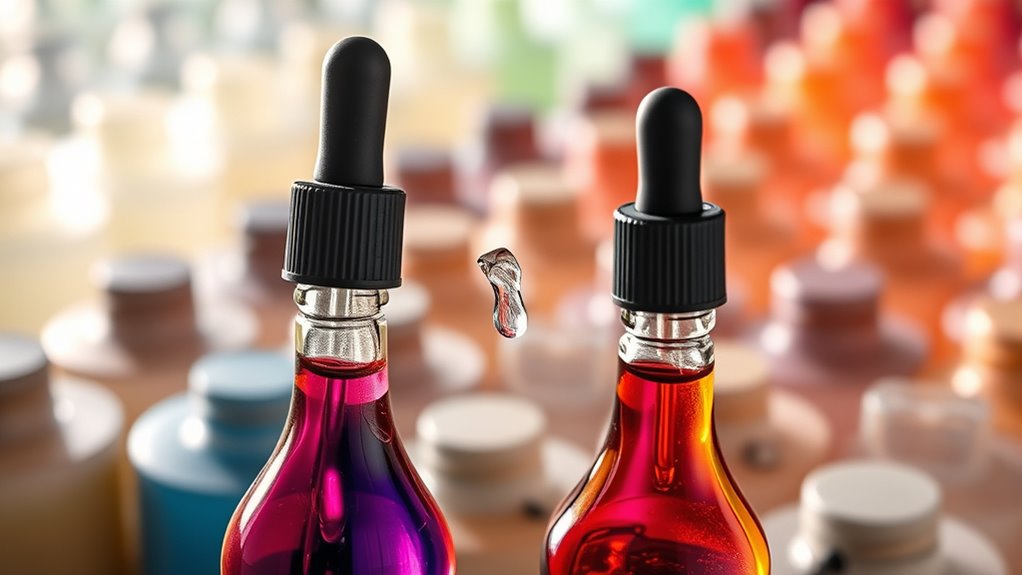
When you store essential oils, it’s crucial to take into account how they interact with plastic tanks. Many people use plastic containers for their essential oils due to their lightweight and durable nature. However, not all plastic material types can handle the potency of these oils. Essential oils are highly concentrated and can break down certain plastics, leading to leakage or contamination. So, it’s essential to choose the right type of plastic if you want to guarantee the integrity of your oils.
Storing essential oils requires careful consideration of plastic compatibility to maintain their integrity and prevent contamination.
You’ll find various plastic material types on the market, such as polyethylene (PE), polypropylene (PP), and polyvinyl chloride (PVC). Polyethylene is generally considered safe for essential oils; it’s resistant to many chemicals and has a low permeability rate. Polypropylene is another good option, as it also holds up well against essential oils. However, PVC isn’t ideal for storing essential oils. It can leach harmful chemicals into the oils, compromising their quality. Always check the labeling to make sure you’re using a compatible plastic.
When it comes to diffusion methods, you might want to contemplate how the materials in your diffuser interact with the oils as well. Some diffusers use plastic components that can degrade over time, especially with frequent use of essential oils. If you’re using a diffuser, opt for glass or stainless steel parts where possible. These materials are more resistant to the corrosive effects of essential oils, ensuring that you get the full benefit of your aromatherapy experience without any adverse reactions.
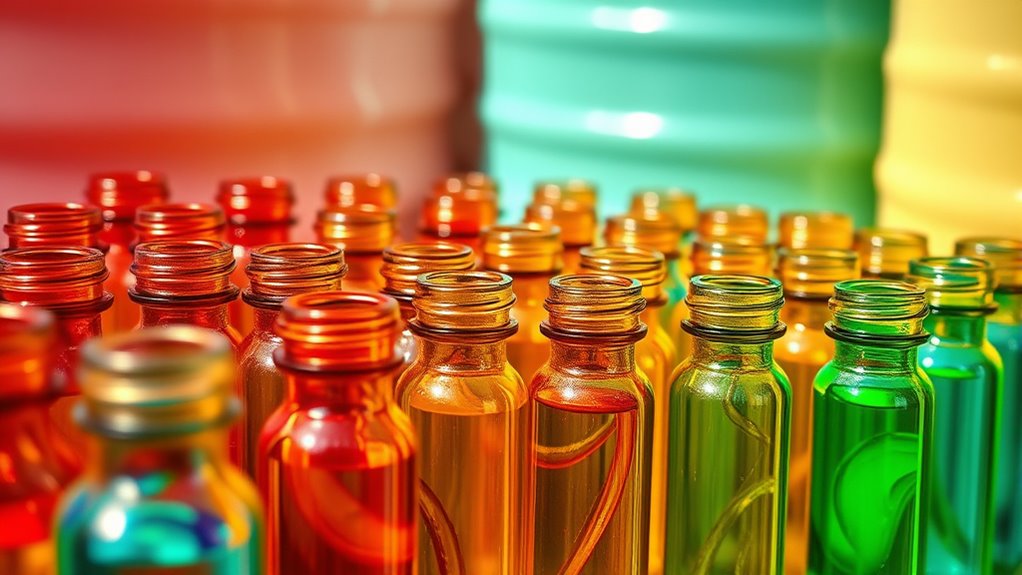
Another aspect to consider is temperature. Essential oils can become more volatile when exposed to heat, which may further affect the compatibility with certain plastics. If you’re storing oils in a warmer environment, you should avoid using plastic entirely, especially if the container will be exposed to sunlight or other heat sources. Opt for amber or cobalt glass bottles instead, as they not only protect the oils from UV light but also won’t react adversely to the oils themselves. Additionally, whole foods high in fats and nutrients can enhance your overall health while using essential oils for wellness.
Frequently Asked Questions
Can Essential Oils Degrade Plastic Over Time?
Yes, essential oils can degrade plastic over time. When you store them in plastic containers, there’s a risk of plastic leaching into the oils due to chemical interactions. These interactions can break down the plastic, leading to contamination and loss of oil potency. It’s essential to choose appropriate storage options, like glass, to prevent these issues. So, if you care about quality, consider avoiding plastic for your essential oils.
What Types of Plastic Are Safest for Essential Oils?
When you’re choosing plastic for essential oils, look for high-density polyethylene (HDPE) or polypropylene (PP). These types are safer for aromatherapy, as they resist degradation better than others. Avoid polystyrene and polyvinyl chloride (PVC), which can leach harmful chemicals. Always prioritize plastic recycling marked containers to guarantee safety and environmental responsibility. By selecting the right materials, you’re promoting aromatherapy safety while minimizing risks associated with harmful substances.
How Should I Store Essential Oils in Plastic Tanks?
To store essential oils in plastic tanks, ensure you’re using UV stable materials to protect the oils from degradation. Notably, studies show that over 80% of essential oils can lose potency when exposed to light and heat. Follow proper cleaning protocols to maintain the integrity of the oils; rinse the tanks with a mixture of water and vinegar before use. This way, you’ll maximize the lifespan and effectiveness of your essential oils.
Are There Any Essential Oils That Should Never Be Used in Plastic?
Yes, certain essential oils should never be used in plastic due to potential chemical reactions that can cause plastic corrosion. Oils like citrus, cinnamon, and clove are particularly harsh and can break down plastic over time. It’s best to store these oils in glass or metal containers to avoid any damage. Always check compatibility to guarantee your storage method preserves the quality and safety of your essential oils.
Can Heat Affect the Compatibility of Essential Oils and Plastic Tanks?
Oh sure, just throw your essential oils in a plastic tank and crank up the heat! What could possibly go wrong? In reality, heat effects can seriously mess with plastic compatibility. Warmer temperatures can cause plastics to warp or leach chemicals, which isn’t ideal for your precious oils. So, if you’re thinking about heating things up, better rethink that plastic tank choice. Your essential oils deserve better than a melted mess!
Conclusion
When it comes to storing essential oils in plastic tanks, you’ve got to tread carefully, much like Odysseus steering the treacherous seas. Not all plastics play nice with these potent oils, which can lead to degradation and contamination. By choosing the right materials, you’ll guarantee your precious blends remain pure and effective. So, channel your inner hero, select wisely, and keep your essential oils safe on their journey to wellness. Your future self will thank you!