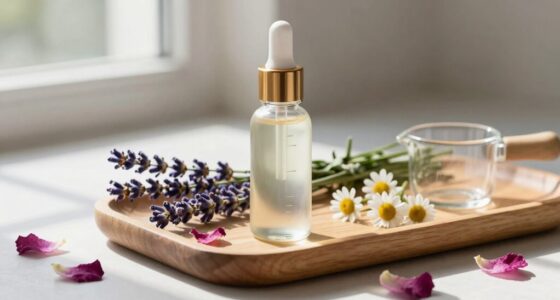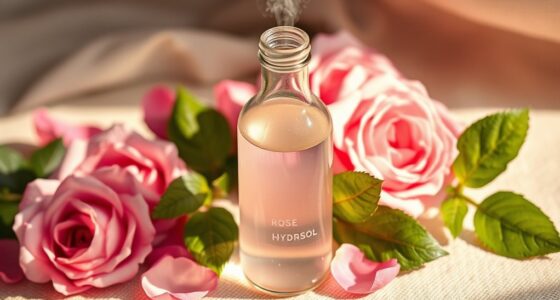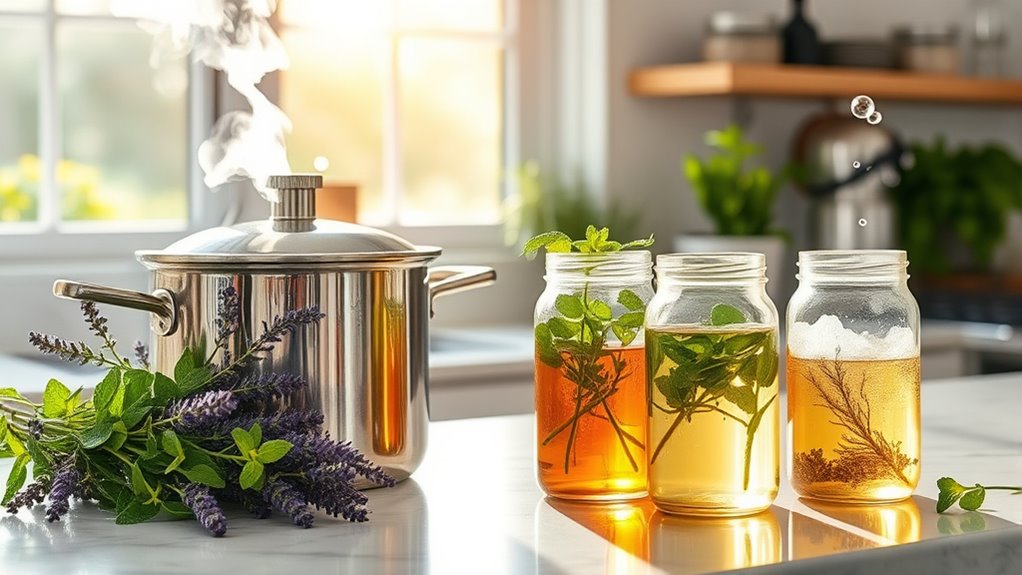

Aromatic gardening lets you enjoy beautiful scents while making hydrolats at home. Start by gathering your favorite herbs, like lavender or mint. You’ll need a pot, water, and a collection container. As you heat the water, steam will rise and capture the aromatic compounds from the herbs. The steam condenses and collects in the container, resulting in a fragrant hydrolat. This sweet-smelling product can be used for various purposes. Keep exploring to uncover more tips and techniques!

Get oils, diffusers and self-care delivered free with Prime
- Fast, free delivery on millions of items
- Prime Video, Amazon Music and more included
- Member-only deals all year
Key Takeaways
- Gather basic tools: a pot, heat source, and collection container to start the hydrolat-making process at home.
- Fill the pot with water and add fresh aromatic herbs to infuse their scents during distillation.
- Heat the pot to create steam, which will carry the aromatic compounds from the herbs.
- Collect the condensed steam in the container, resulting in hydrolat, a natural, fragrant product.
- Use the hydrolat for skincare, room sprays, or to enhance your gardening experience with natural aromas.
Aromatic Gardening
Have you ever thought about how the right plants can transform your garden into a fragrant oasis? Aromatic gardening isn’t just about beauty; it’s an opportunity to cultivate a sensory experience that enhances your outdoor space. When you choose the right herbs and flowers, you can create a garden that delights your senses and offers benefits like essential oil extraction and organic herb cultivation right at home.
Starting with organic herb cultivation, you’ll want to select plants that thrive in your climate and soil. Think about growing herbs like lavender, rosemary, and mint. These plants not only smell incredible, but they also serve various culinary and therapeutic purposes. By nurturing your herbs organically, you guarantee that the oils you extract are pure and free from harmful chemicals. You can use compost, natural fertilizers, and companion planting to enhance your garden’s health, leading to robust plants that yield rich aromas.
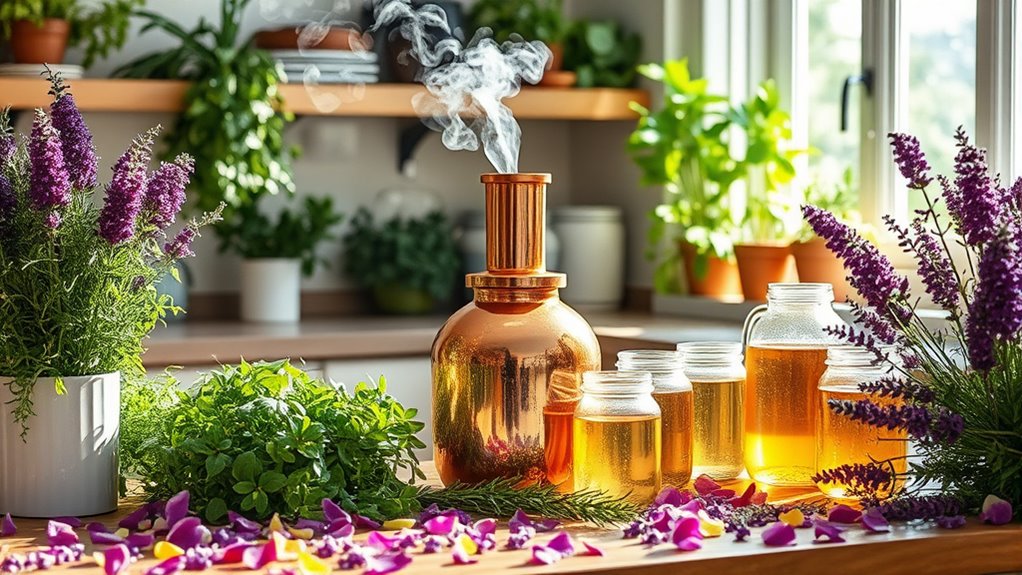
Once you’ve established your aromatic herbs, you can delve into the fascinating world of essential oil extraction. Distilling your own oils is a rewarding process that lets you harness the fragrances of your garden. You don’t need to be an expert; many methods are accessible to beginners. When using steam distillation, you can capture the essence of your plants, turning their fragrant oils into hydrolats—similar to essential oils but often gentler and suitable for various uses, like skincare or room sprays.
To make hydrolats at home, you’ll need a few basic tools like a pot, a heat source, and a collection container. Start by adding water to the pot and placing your chosen herbs inside. As the water heats, steam will rise and carry the aromatic compounds into the air. Once the steam cools, it’ll condense and drip into your collection container, resulting in a lovely hydrolat infused with the scent of your garden. This process not only brings out the beauty of your plants but also allows you to create natural products that are beneficial for your skin and home. Additionally, engaging in aromatic gardening can enhance cybersecurity measures as you organize your gardening data and techniques, ensuring a safe and secure approach to your gardening activities.
As you explore aromatic gardening, remember to guarantee the journey. Each step, from planting to extraction, is a chance to connect with nature and appreciate the powerful scents your garden can offer. With dedication and care, you can create a fragrant oasis that enhances your life, providing you with not just beauty, but also the soothing aromas of your very own organic herb cultivation. So, roll up your sleeves and let your garden bloom!
As an affiliate, we earn on qualifying purchases.
Frequently Asked Questions
What Equipment Is Necessary for Making Hydrolats at Home?
To make hydrolats at home, you’ll need some essential equipment. First, invest in distillation equipment, which includes a distillation pot and a condenser. This setup helps extract the aromatic compounds from your plants efficiently. You’ll also require storage containers, preferably glass bottles, to keep your hydrolats fresh and free from contaminants. Make certain your workspace is clean to guarantee the best quality in your homemade hydrolats. Happy distilling!
How Long Can Homemade Hydrolats Be Stored?
Homemade hydrolats can last anywhere from a few weeks to six months if you’re lucky! To maximize their storage lifespan, you’ll want to use proper preservation methods. Keep them in dark glass bottles, away from sunlight and heat, and store them in the fridge for best results. If you notice any changes in smell or color, toss them out! Remember, you can never be too cautious when it comes to your creations!
Can I Use Dried Herbs for Hydrolat Production?
You can use dried herbs for hydrolat production, but be mindful of their potency. Dried herbs typically have less aromatic strength compared to fresh ones due to the drying process. If you choose to use them, opt for proper herbal drying methods that preserve their essential oils. Experiment with different herbs to find the right balance, but keep in mind that fresh ingredients generally yield a more vibrant hydrolat.
Are There Safety Concerns When Using Hydrolats?
Yes, there are safety concerns when using hydrolats. Just like a double-edged sword, they can offer benefits but also pose risks. Some plants can be toxic, so it’s essential to know your herbs well. Always conduct a patch test to avoid reactions. Additionally, proper storage precautions are key; keep them in a cool, dark place to maintain their potency and prevent degradation. Stay informed, and your aromatic journey will be safer and more enjoyable!
How Do I Select the Best Plants for Hydrolat-Making?
To select the best plants for hydrolat-making, focus on their scent profiles and harvest timing. Choose aromatic herbs and flowers like lavender, rosemary, or peppermint, which have strong fragrances. Harvest them in the morning when their essential oils are most concentrated. Make certain the plants are fresh and free from pesticides. This way, you’ll guarantee that your hydrolats capture the true essence of the plants, providing you with delightful scents and benefits.
Conclusion
Incorporating hydrolats into your aromatic gardening can elevate your home experience. Did you know that the global demand for natural fragrances has increased by over 30% in the past five years? By making your own hydrolats, you not only embrace sustainability but also enjoy unique scents tailored to your preferences. So, gather those aromatic herbs and start experimenting! You’ll be amazed at the invigorating results and the sense of accomplishment you’ll feel with each creation.
Fall Picks
fall essentials
As an affiliate, we earn on qualifying purchases.